UK Alternatives to the 9-Box Grid for HR Teams
UK HR teams can replace or supplement the 9-box grid with skills and competency frameworks, continuous performance management, 360-degree feedback, talent profiles, objectives and OKRs, people analytics and AI-assisted talent insights — or combine several sources of evidence rather than relying on a single performance-potential rating.
The 9-box grid has been used by HR teams for decades to assess employees according to two dimensions: current performance and future potential. It remains a familiar framework for talent reviews and succession planning, but it is not the only way to understand employee capability.
For many mid-sized UK organisations, the bigger question is whether a fixed nine-box assessment provides enough useful information to support today’s approach to performance, development, skills and career progression.
The right approach does not necessarily mean abandoning the 9-box grid completely. In many cases, a better solution is to use multiple sources of evidence rather than relying on a single performance-potential rating.
This guide explains what the 9-box grid is, where it can fall short and which alternatives UK HR teams can consider.
Key facts
- The 9-box grid rates employees on two axes — performance and potential — across nine cells.
- Potential is a prediction, not an observation, which makes it the grid’s most subjective axis.
- Gallup warns that subjective potential judgements can introduce bias into succession decisions.
- Alternatives include 4-box matrices, skills frameworks, talent profiles, 360 feedback, OKRs and people analytics.
- Most mid-sized organisations get the best results by combining several evidence sources, not swapping one grid for another.
What Is the 9-Box Grid?
The 9-box grid is a performance-potential matrix used in talent management and succession planning.
It normally places employees on two axes:
- Performance: how effectively someone is performing in their current role.
- Potential: their perceived capacity to succeed in a larger, more complex or different role in the future.
Combining low, medium and high ratings on each axis creates nine boxes.
How Does the 9-Box Grid Work?
Managers typically assess an employee’s current performance and future potential, after which the employee is placed into one of nine cells.
For example, someone assessed as high-performing and high-potential might be considered for accelerated development or succession planning. Someone performing well but with no current aspiration or evidence of readiness for a larger role might receive a different development approach.
The model’s appeal is straightforward: it creates a common language for talent discussions and makes a large employee population easier to visualise.
However, performance and potential are not the same thing. Performance concerns what someone has demonstrated; potential is a prediction about what they might do in the future. That distinction is one of the central challenges of the traditional model.
What Is the 9-Box Grid Used For?
HR teams commonly use the grid for:
- Succession planning
- Identifying high-potential employees
- Leadership development
- Talent reviews
- Development prioritisation
- Workforce planning
- Career discussions
Its value is generally greatest when it structures a discussion about evidence and development, rather than becoming a permanent label attached to an employee.
Why Are HR Teams Looking for Alternatives to the 9-Box Grid?
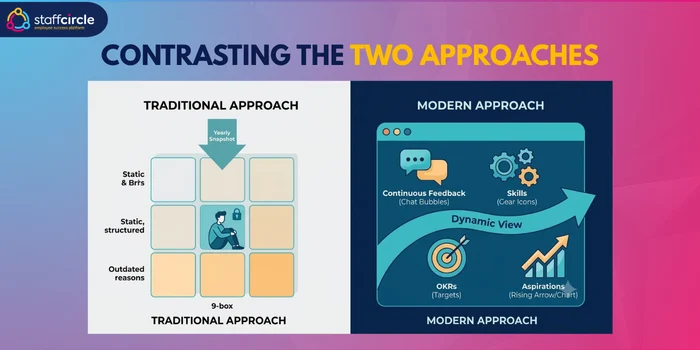
Modern organisations increasingly need a more detailed view of skills, capability, development, readiness, performance and career aspirations.
Research and practitioner commentary increasingly highlight the difficulty of assessing potential consistently. Gallup, for example, identifies the assessment of potential as a significant challenge and warns that subjective judgements can introduce bias.
This does not necessarily mean the 9-box grid must disappear. Instead, it suggests that HR teams should consider whether a fixed performance-potential rating is the best evidence for the decision they are trying to make.
What Are the Limitations of the 9-Box Grid?
The strongest argument for considering 9-box grid alternatives is not that the framework is inherently useless. It is that it can become problematic when organisations treat its categories as objective measurements rather than prompts for discussion.
Does the 9-Box Grid Oversimplify Employee Potential?
Yes, potentially.
An employee’s future capability cannot easily be represented by a single “potential” rating. Career aspirations, learning agility, experience, skills, motivation, role availability and personal circumstances can all affect whether someone is ready for a future position.
A person can also be an excellent performer without wanting a promotion or management role.
Conversely, someone who is not currently performing at their full capability may have strong potential if they are developing rapidly or are working in a role that does not make good use of their strengths.
The fundamental issue is that performance is generally more observable than potential.
Can the 9-Box Grid Introduce Manager Bias?
Yes, it can.
Managers may interpret “high potential” differently, and subjective assessments can be affected by factors such as visibility, familiarity, communication style or assumptions about leadership.
Gallup specifically notes that subjective or biased evaluations can undermine the usefulness of the 9-box approach.
This is why calibration matters. Managers should be able to explain why an employee has received a particular assessment using consistent evidence.
Is the 9-Box Grid Too Dependent on Subjective Ratings?
The potential axis is particularly difficult.
Performance can often be supported by objectives, outcomes, behaviours and documented feedback. Acas recommends that performance reviews consider agreed objectives, behaviours and development activity.
Potential is more predictive. Without defined criteria, “high potential” can become a manager’s opinion rather than an evidence-based assessment.
Does the 9-Box Grid Encourage Employee Labelling?
It can if the categories are treated as fixed identities.
An employee assessed as “low potential” may not actually have low capability. They may have different career aspirations, need additional development or simply not be suited to the particular future role being considered.
Talent assessment should therefore distinguish between “not ready for this role now” and “low potential”.
The first is a specific, evidence-based assessment. The second can become a broad and potentially limiting label.
Can a 9-Box Grid Become Outdated Between Reviews?
Yes.
A grid normally reflects a particular point in time. Employees acquire skills, change roles, take on projects and develop through experience.
A static talent rating can therefore become inaccurate if it is not regularly reviewed.
This is one reason continuous performance and development approaches are attractive: they create more opportunities to update the evidence behind talent decisions.
Is the 9-Box Grid Suitable for Continuous Performance Management?
Not particularly well on its own.
A grid is a snapshot; continuous performance management is an ongoing process.
Acas recommends regular performance conversations alongside formal reviews, including feedback, coaching and one-to-ones.
A modern talent process can therefore use continuous performance information as evidence for periodic talent reviews rather than relying on one annual rating.
What Are the Best Alternatives to the 9-Box Grid?
There is no single replacement that works for every organisation. The best framework depends on the question you are trying to answer.
1. 4-Box Performance-Potential Matrix
How it works: the 4-box model simplifies the 9-box by reducing performance and potential to four broad combinations.
For example:
- High performance / high potential
- High performance / lower potential
- Lower performance / high potential
- Lower performance / lower potential
Advantages: it is simple and easy to explain. For smaller or less mature talent processes, it can create a useful starting point for succession conversations.
Limitations: it does not solve the underlying problem of assessing potential. It still categorises people according to performance and potential and therefore retains many of the subjectivity and labelling risks of the 9-box grid.
When should UK HR teams use it: use a 4-box model when simplicity is the priority and managers already have reasonably consistent assessment criteria. It is better viewed as a simplified version of the 9-box, rather than a fundamentally different philosophy.
2. Skills and Competency Frameworks
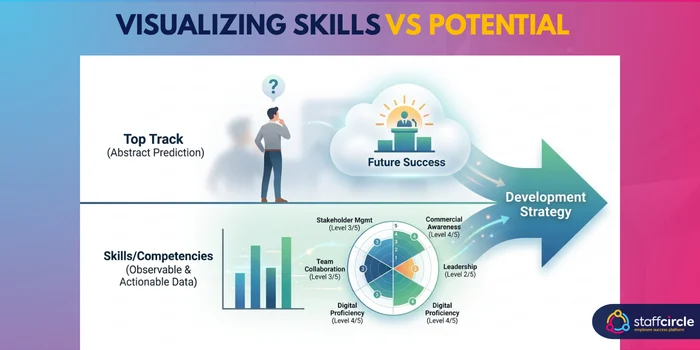
A skills or competency framework asks a different question: what capabilities does someone have, and what capabilities do they need to develop?
What is a competency framework? A competency framework defines the skills, knowledge and behaviours required for specific roles or levels.
Instead of asking whether someone has “high potential”, HR can assess their capability against defined expectations.
How does skills-based assessment work? Employees can be assessed against specific skills and proficiency levels. For example:
| Skill | Current Level | Required Level | Development Need |
|---|---|---|---|
| Stakeholder management | 2 | 3 | Coaching |
| Commercial awareness | 3 | 4 | Stretch project |
| Leadership | 2 | 3 | Leadership programme |
This produces information that can directly inform development.
How can competency frameworks support development? A competency framework can connect role → skills → assessment → gap → development → progression.
That makes it particularly useful for organisations trying to improve internal mobility and succession planning.
When is this better than assessing “potential”? A skills-based approach can be preferable when the organisation needs to understand readiness for specific roles, rather than make a broad prediction about an employee’s future.
StaffCircle strongly focuses on this model, connecting role-based competencies and skills with development and succession planning. Its current platform also uses AI to generate competency frameworks and identify skills gaps.
3. Skill-Will Matrix
The Skill-Will Matrix assesses employees according to two dimensions:
- Skill: ability or capability to perform the task
- Will: motivation, confidence or willingness to perform it
How does it differ from the 9-box grid? The 9-box focuses on performance and potential. The Skill-Will Matrix focuses more directly on current capability and motivation, making it particularly useful for coaching conversations.
When should managers use it? It can help managers decide whether an employee needs:
- More training
- More support
- Greater challenge
- Increased autonomy
- Motivation or engagement support
4. Talent Profiles
A talent profile provides a broader picture of an employee than a single rating.
It might include:
- Skills
- Competencies
- Experience
- Achievements
- Career aspirations
- Development goals
- Qualifications
- Performance history
- Potential career paths
How can talent profiles support internal mobility? Instead of asking “which box is this employee in?”, HR can ask: “which opportunities could this employee realistically move towards, and what development would they need?”
This is a more actionable question for organisations investing in internal mobility.
How can talent profiles support succession planning? Talent profiles can be mapped against the requirements of critical roles to identify potential successors and development gaps.
This changes succession planning from a generic potential ranking into a more specific role-readiness exercise.
5. Continuous Performance and Development Reviews
Continuous performance management replaces the idea that performance is assessed only during an annual review with regular conversations throughout the year.
These can include:
- One-to-ones
- Goal updates
- Coaching
- Feedback
- Development conversations
- Recognition
- Progress reviews
How do regular check-ins differ from annual talent ratings? A regular check-in captures what is happening now. An annual talent rating looks backwards over a longer period and may be affected by recency or memory.
Acas recommends regular informal conversations alongside formal reviews, including feedback, coaching and one-to-ones.
How can ongoing feedback identify development needs? Repeated conversations allow managers and employees to identify patterns earlier.
Instead of discovering during an annual review that an employee needs development in a particular skill, the organisation can respond when the need first appears.
6. 360-Degree Feedback
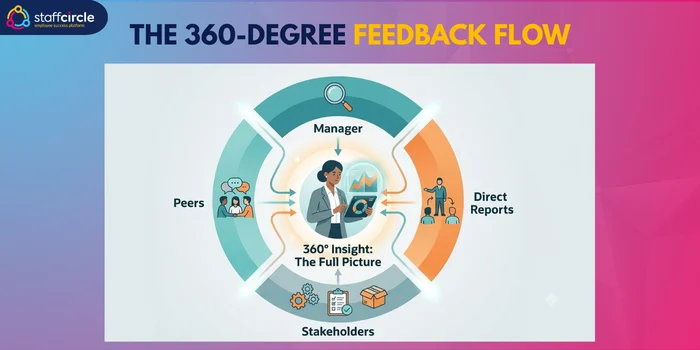
360-degree feedback collects perspectives from multiple people who work with an employee, rather than relying solely on their manager.
Sources might include:
- Manager
- Peers
- Direct reports
- Project colleagues
- Other stakeholders
When should HR teams use 360 feedback? It can be particularly useful for leadership and behavioural development, where a manager may not observe every aspect of someone’s work.
7. Objectives and OKR-Based Performance Management
Clear objectives create evidence about what someone was expected to achieve and whether they achieved it.
Acas recommends objectives that are specific, measurable, achievable, relevant and time-bound: SMART objectives.
Can OKRs replace performance-potential ratings? Not completely.
Objectives are useful for measuring outcomes, but they do not necessarily tell you about skills, career aspirations, behaviours or readiness for another role.
They work best as one layer of evidence.
How should objectives be combined with development conversations? A strong process connects objectives → results → feedback → skills → development.
That provides a much richer view than a single performance rating.
8. Talent Reviews Without Fixed Categories
An evidence-based talent review asks managers to discuss employees using defined evidence rather than placing everyone into predetermined categories.
Evidence could include:
- Objective achievement
- Skills assessments
- 360 feedback
- Development progress
- Career aspirations
- Role readiness
- Behavioural examples
How can managers discuss talent without putting employees into boxes? Focus the discussion on questions such as:
- What has this employee demonstrated?
- What role could they realistically move into?
- What evidence supports that assessment?
- What skills are missing?
- What development would improve readiness?
- What support does the employee want?
How can calibration improve consistency? Calibration allows managers to compare assessments and challenge inconsistent standards.
For example, if one manager considers someone “high potential” because they consistently deliver in their current role while another uses evidence of leadership capability, the difference becomes visible and can be resolved.
9. Data-Driven and AI-Assisted Talent Insights
People analytics can bring together information from multiple HR processes to identify patterns in performance, skills, development and workforce movement.
This can help HR teams identify:
- Skills gaps
- Development priorities
- Succession risks
- Performance trends
- Capability gaps
Can AI identify skills gaps? AI can help analyse structured employee and role data and surface potential gaps.
It should, however, be treated as an analytical aid rather than an unquestionable decision-maker.
Can AI help identify development opportunities? Yes. AI-assisted systems can connect employee capabilities with role requirements and development pathways.
StaffCircle, for example, positions its AI competency framework as a way to create role-based skills frameworks and connect competencies with reviews, development and succession.
What are the risks of using AI to assess employee potential? AI does not automatically make talent decisions objective.
If the underlying data contains bias, an automated system can potentially reproduce or amplify it. The ICO also highlights the importance of human oversight where automated decision-making is used in relation to workers.
For UK organisations, AI should therefore support evidence gathering and decision-making while appropriate human judgement remains involved.
Which Alternative to the 9-Box Grid Is Right for Your Organisation?
Choose a 4-Box Grid If You Need Simplicity
Choose it when your organisation needs a straightforward framework for talent discussions and has limited assessment infrastructure.
Remember that it retains many of the 9-box grid’s limitations.
Choose a Skills Framework If Development Is the Priority
A skills or competency framework is particularly useful when your biggest challenge is understanding capability gaps and creating clearer career pathways.
Choose Continuous Performance Management If Annual Reviews Feel Outdated
If employees and managers need more regular conversations, continuous performance management is likely to provide more useful evidence than an annual rating.
Choose 360-Degree Feedback If You Need Multiple Perspectives
This is particularly valuable when behavioural or leadership capabilities are difficult for a single manager to observe.
Choose Talent Profiles If Internal Mobility Matters
Talent profiles provide a richer picture of what employees can do, what they want to do and what they need to develop.
Choose People Analytics If You Need Organisation-Wide Insights
Analytics can help HR leaders identify patterns across teams and skills, provided the underlying data is reliable and appropriately governed.
Combine Multiple Approaches for a More Complete Picture
For many mid-sized organisations, the best answer is not to replace one grid with another.
Instead, combine performance + objectives + skills + feedback + development + role readiness + employee aspirations.
That creates a much more complete picture of talent.
How Can UK HR Teams Move Beyond the 9-Box Grid?
Moving beyond the grid is an eight-step process: decide what you are actually assessing, separate performance from potential, define evidence-based criteria, gather data from multiple sources, involve employees, calibrate managers, turn assessments into actions and keep the data current.
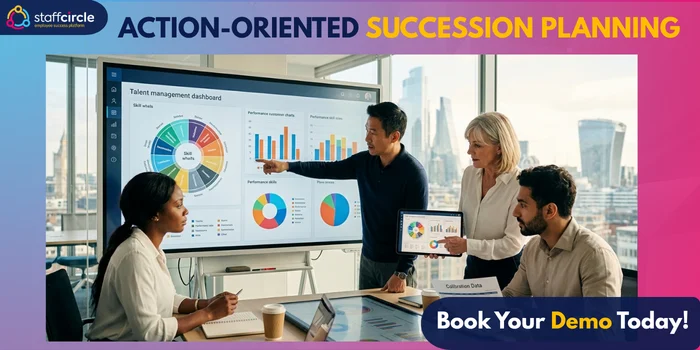
- Define what you are trying to assess. Are you assessing current performance, readiness for promotion, leadership potential, skills gaps, succession risk or development needs? Different questions require different evidence.
- Separate performance from potential. Do not assume that a strong performer is automatically ready for a larger role. Define what “ready” means for the specific role being considered.
- Define evidence-based criteria. Document what each assessment means. For example, “ready within 12 months” should have clearer criteria than “high potential”.
- Gather data from multiple sources. Combine objectives, performance reviews, skills assessments, feedback and development progress where appropriate.
- Involve employees in development discussions. Talent management should not happen entirely behind closed doors. Employees should understand their development opportunities, career goals and the capabilities they need to build.
- Calibrate manager assessments. Compare assessments across managers to identify inconsistent standards and challenge assumptions.
- Turn assessments into development actions. An assessment has limited value if nothing happens afterwards. Every talent discussion should result in a clear action, such as coaching, training, a stretch assignment, mentoring, job rotation, a new project or a career pathway.
- Review and update talent data regularly. Skills develop, roles change, employees change their career aspirations and business priorities change. Your talent framework should change with them.
How Can HR Teams Reduce Bias in Talent Assessment?
Bias cannot simply be eliminated by choosing a different framework. It must be addressed through the design and governance of the assessment process.
- Use clear and consistent assessment criteria: define what different skill levels, readiness states and performance outcomes mean.
- Base decisions on multiple sources of evidence: avoid allowing one manager’s opinion to determine an employee’s entire talent profile.
- Avoid labelling employees by potential: assess readiness for a specific opportunity rather than assigning a permanent judgement about someone’s future.
- Use calibration across managers: calibration helps identify inconsistent standards between departments and managers.
- Give employees a voice in their development: career aspirations matter. Someone may be an excellent candidate for a role but have no desire to pursue it.
- Review talent decisions for patterns and disparities: HR teams should periodically review talent outcomes for unexpected patterns across groups, roles or departments.
This is especially important where automated analytics or AI are involved. The ICO states that automated decision-making and profiling can create risks for workers’ rights and emphasises meaningful human oversight where relevant.
What Should HR Teams Look for in Software Beyond the 9-Box Grid?
If your goal is to move towards a more dynamic talent-management process, look for software that supports:
- Goal and objective management: SMART objectives, OKRs, KPIs and progress tracking.
- Continuous feedback: one-to-ones, check-ins, recognition and real-time feedback.
- Skills and competency management: role-based competencies, skills assessments and skills-gap analysis.
- Development planning: individual development plans, career pathways and learning objectives.
- 360-degree feedback: multi-source feedback that can inform development conversations.
- People analytics: dashboards and reporting across performance, skills and workforce data.
- Succession planning: tools that connect role requirements with employee capabilities and development.
- Employee and manager dashboards: clear, role-specific views of objectives, feedback, development and progress.
- AI-powered insights: AI that can help analyse people data, identify patterns and support development with appropriate human oversight.
- Reporting and integrations: the ability to connect performance information with the wider HR technology environment.
StaffCircle currently positions its platform around this connected approach, combining performance management, employee development, skills, succession planning, engagement and AI-powered workforce insights. Its Success Circles framework is specifically presented as an alternative to static 9-box succession planning, while its competency framework tools connect skills with development and succession.
Final Thoughts
The strongest case for moving beyond the 9-box grid is not that the model is always wrong. It is that one grid cannot capture everything HR teams need to know about an employee.
Performance, potential, skills, readiness, motivation, career aspirations and development needs are different concepts. Treating them as two ratings can make talent decisions appear more precise than the underlying evidence supports.
For UK HR teams, a more robust approach is to build talent decisions around observable evidence and ongoing development.
StaffCircle’s platform connects performance management with skills, employee development and succession planning, with AI-powered competency frameworks and analytics to provide a more dynamic view of talent. Book a demo today.
FAQ
What can I use instead of the 9-box grid?
Options include a 4-box performance-potential matrix, skills and competency frameworks, Skill-Will Matrices, talent profiles, continuous performance management, 360-degree feedback, objective-based performance management and data-assisted talent insights. The right choice depends on whether you are trying to assess performance, capability, readiness, development or succession.
What is the best alternative to the 9-box grid?
There is no universal best alternative. For organisations focused on employee development and succession, a skills and competency framework can provide more actionable information than a broad potential rating. Continuous performance management and multi-source feedback can then add additional evidence.
What are the disadvantages of the 9-box grid?
Common concerns include oversimplification, subjective potential ratings, manager bias, employee labelling and the risk of creating a static snapshot of a changing workforce. Because potential is harder to observe than performance, assessments can vary between managers, and a grid completed once a year can quickly fall out of date as skills and roles change.
Is the 9-box grid still relevant?
It can still be useful as a structured conversation tool, particularly for succession planning, provided assessments are calibrated and supported by clear, consistent criteria. However, many organisations are supplementing or replacing it with more dynamic approaches that incorporate skills, development, continuous feedback and role readiness rather than a single annual performance-potential rating.
How can HR teams assess employee potential without the 9-box grid?
Instead of assigning a broad potential rating, assess evidence such as demonstrated skills, role readiness, learning and development progress, career aspirations, behavioural feedback and experience against the requirements of a specific future role. This turns a vague prediction about someone's future into a specific, evidence-based judgement about readiness for a defined opportunity.
What is the best talent assessment framework for a UK business?
The best framework is the one that matches the organisation’s purpose, workforce and evidence requirements. A combination of continuous performance data, objectives, skills and competency assessments, development planning and structured talent reviews can provide a more complete picture than relying on a single performance-potential matrix.
Related articles
See StaffCircle in action
Book a personalised demo and see how StaffCircle drives performance, engagement and development.