How does a performance improvement plan work?
A performance improvement plan works as a short, structured cycle: the gap is measured and discussed, targets and support are agreed in writing, the help is delivered, progress is reviewed on fixed dates, and the plan is closed, extended or escalated at the end.
Key facts
- The cycle is: establish the gap, agree the plan, deliver support, review, decide.
- Support and review dates are the employer's commitments, not optional extras.
- Nothing at the closing meeting should be a surprise to the employee.
- The ACAS Code of Practice should shape any formal performance process in the UK.
- This article is general guidance on process, not legal advice.
What has to happen before a performance improvement plan starts?
Before a plan is written, three things need checking: that the standard was clearly communicated, that the gap has been measured rather than assumed, and that the cause is genuinely capability. A plan aimed at the wrong cause does not work. If the brief was unclear, the tools were missing or the person was covering two roles, fix that first and you may not need a plan at all.
This is also the point to decide whether a formal plan is proportionate. What a performance improvement plan is includes a decision table for choosing between an informal conversation and a formal plan. Opening a plan too early burns the cheapest fix available; opening one too late leaves the employee without clear feedback for months.
How does a performance improvement plan work, step by step?
It runs in five stages, each with a defined output. Stage one produces evidence, stage two produces an agreed written plan, stage three delivers the support, stage four produces a dated review record, and stage five produces a written outcome. Skip any stage and the plan becomes hard to run fairly, because something later depends on the output of the one you skipped.
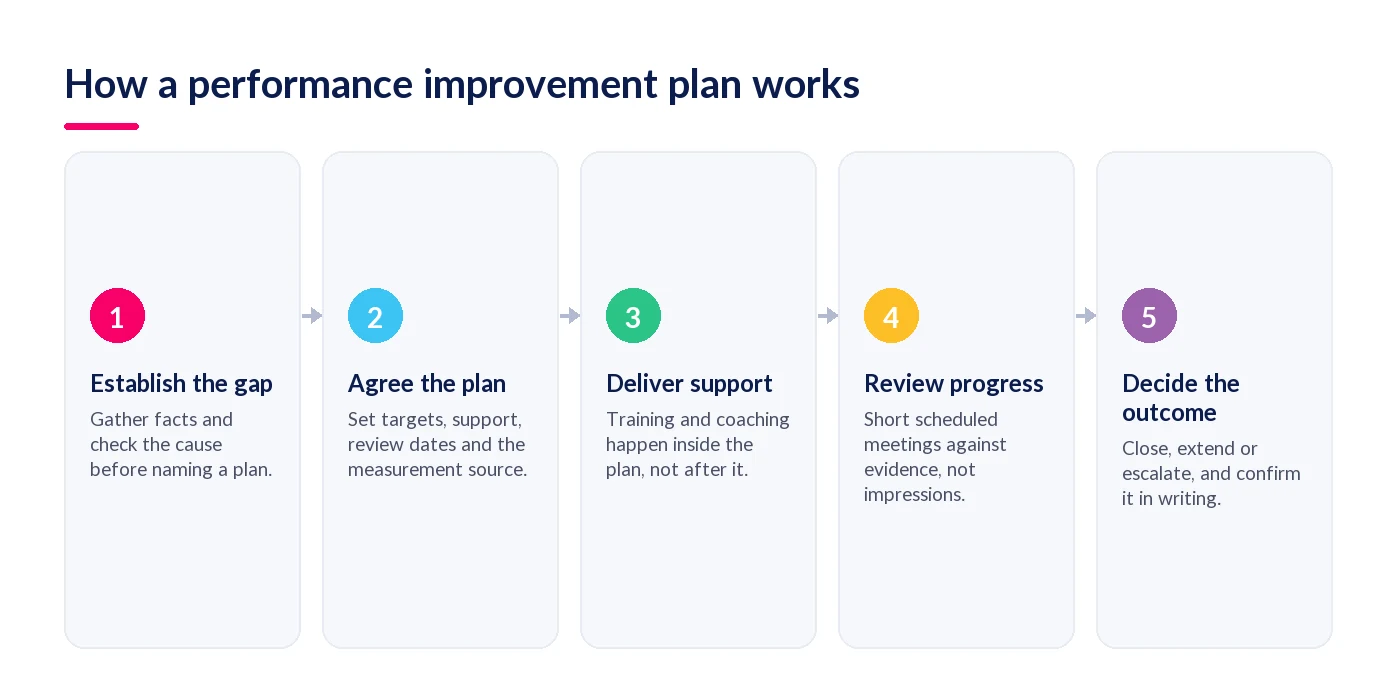
- Establish the gap in facts. Gather the evidence before you name a plan: measured output, dated examples, and the standard the role requires. Check the cause first. Unclear briefs, missing tools, a new system or a health issue all look like poor performance and none of them are fixed by a plan.
- Hold the opening meeting and agree the plan. Meet, explain the concern, and hear the employee's account before anything is finalised. Agree the targets, the support, the measurement source and the review dates in that meeting, then issue the written plan. The employee should leave knowing exactly what good looks like and by when.
- Deliver the support you promised. Training, coaching, shadowing, a workload change or clearer instructions happen inside the plan, not after it. Each item needs an owner and a date. If the employer misses its own commitments, the plan cannot fairly be judged against the employee alone.
- Review progress on the scheduled dates. Hold each review as booked, compare evidence against the target rather than impressions, and write down what was said. Confirm whether the agreed support was delivered. Adjust the plan in writing if something is not working, so there are no surprises at the end.
- Decide and confirm the outcome. At the closing review, decide whether the standard has been met, whether a short extension is fair, or whether the matter moves to a formal capability process. Give the decision, the reasons and the next steps in writing, and keep the review record with the plan.
Notice how much of that sits with the employer. Four of the five stages are things the organisation has to do properly: measure fairly, explain clearly, deliver support, and hold the meetings it scheduled. That is what separates a plan that improves performance from one that simply records it.
Worth a read alongside this: The Ultimate Guide to Performance Reviews covers how to run the conversation itself, which is the part managers find hardest.
Who does what during a performance improvement plan?
The manager owns the plan, the evidence and the decision. The employee owns their own effort, raises blockers early and contributes to the support section. HR owns consistency and process: checking the wording is fair, that the timescale is achievable, and that the same standard is applied across teams. Confusing those roles is how plans go wrong.
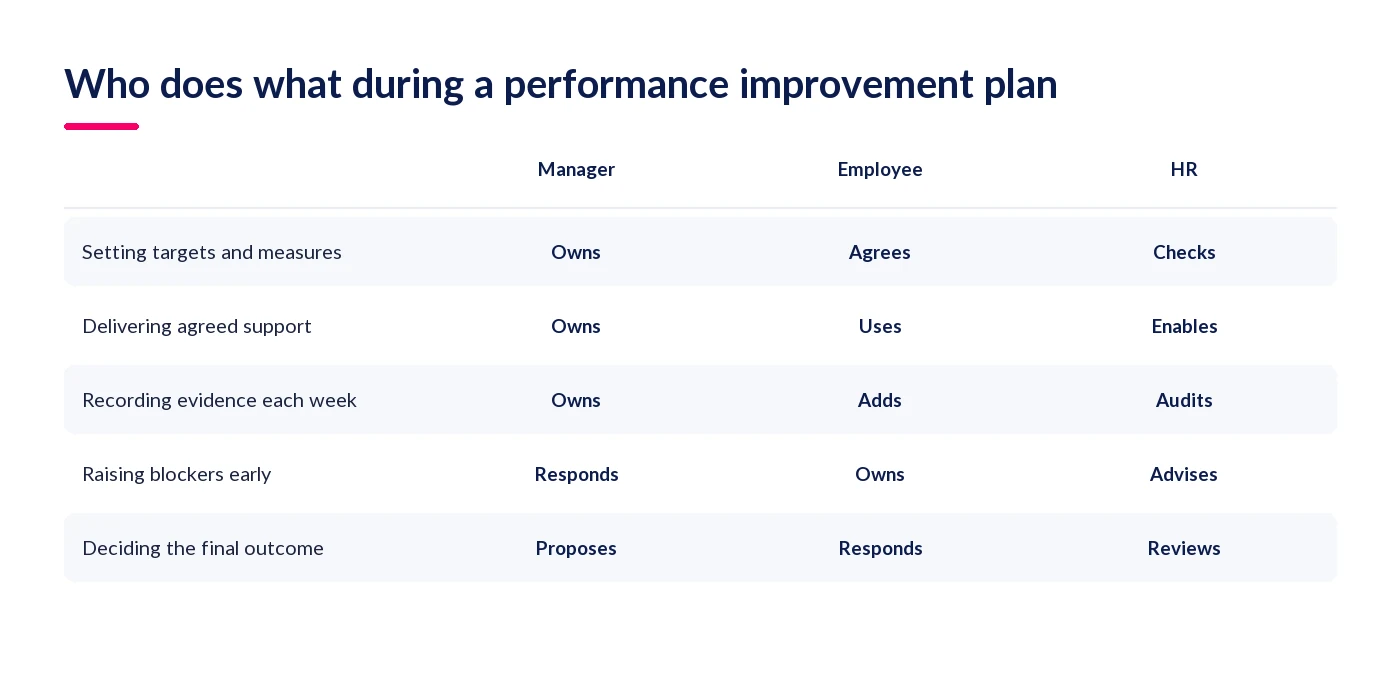
One role is often missed: whoever provides the support. If a course, a mentor or a systems change is part of the plan, that person needs to know they are on the critical path. A plan that relies on a training booking nobody made is not a plan the employee can succeed in.
How is progress measured during the plan?
Progress is measured against the source named in the plan, not against a manager's recollection at the review. Each target should say where the number comes from: a named report, a system field, a sample of work, or a defined observation. If two people could look at the same evidence and disagree about whether the target was met, the target is not written tightly enough.
Evidence is far easier to produce when it already exists. StaffCircle's performance management and development module keeps objectives, one-to-one notes, feedback and review dates on a single record, and customers report up to 90% less performance admin as a result; how that figure is measured is set out on our customer outcomes page. The same habit that makes a normal review cycle work — recording evidence as it happens — is what makes a plan defensible. The performance management system hub covers how the wider cycle fits together.
What does the ACAS Code mean for how you run a plan?
The ACAS Code of Practice on disciplinary and grievance procedures sets out what fair handling looks like for UK employers: establish the facts, put the concern in writing, hold a meeting, allow the employee to be accompanied at formal hearings, decide, and give a right of appeal. The Code also notes that a tribunal can adjust a compensation award by up to 25% where either side unreasonably fails to follow it.
In practical terms that means running an improvement plan as a support process, keeping it separate from conduct matters, and making sure the written record reflects what actually happened at each stage. It also means the outcome should never be pre-decided: if the plan was designed so nobody could pass it, no amount of paperwork makes the process fair. What happens at the end of a performance improvement plan covers both outcomes and the process behind each.
This article describes good process, not the law. Employment law is fact-specific and changes, so take advice from a qualified employment law adviser before relying on a plan as a step towards dismissal.
If you want the document itself rather than the process around it, our guide to writing a performance improvement plan gives you a template with worked example numbers, and you can see how the evidence behind a plan is kept in one place in StaffCircle's performance management and development module.
Frequently asked questions
Does a performance improvement plan mean I am being managed out?
It should not. A properly run plan exists to close a gap, with support attached and a genuine chance of success. Signs of a fair plan include achievable targets, named help with dates, and reviews that actually happen. If none of those are present, that is a badly run process, and worth raising with HR.
What support should an employer provide during a performance improvement plan?
Whatever would realistically close the gap: training, coaching, shadowing a colleague, clearer instructions, a temporary workload change, or access to a tool or report. Each item needs a named owner and a date. Support that is listed but never delivered undermines the whole plan and is one of the most common failures.
Can an employee bring someone to a performance improvement plan meeting?
Many employers allow a colleague or trade union representative at review meetings as good practice, even where no statutory right applies to an informal meeting. The statutory right to be accompanied applies to formal disciplinary and grievance hearings. Check your own policy, and take advice on your specific circumstances rather than relying on general guidance.
Should HR attend performance improvement plan meetings?
HR usually reviews the plan before it is issued and attends the opening and closing meetings, while the manager runs the interim reviews. That balance keeps the plan owned by the person who holds the evidence, while HR checks the process is consistent, the timescale is fair and the wording is defensible across teams.
What happens if the employer does not deliver the promised support?
The plan cannot fairly be judged against the employee alone. If agreed training, coaching or a workload change did not happen, that should be recorded at the review and the timescale adjusted so the employee still gets a fair run at the target. Raise it in writing at the review rather than afterwards.
Related articles

See StaffCircle in action
Book a personalised demo and see how StaffCircle drives performance, engagement and development.