Choosing Performance Management Software for Hybrid Teams: 2026 Buyer’s Guide
Hybrid working has become a permanent feature of many UK workplaces since the COVID-19 pandemic. Employees increasingly expect flexible working arrangements that help them achieve a better work-life balance while reducing commuting time and costs.
However, managing a workforce spread across homes, offices, and multiple locations creates new operational complexities for employers. With busy schedules and heavy workloads, it is difficult for managers and HR professionals to consistently track employee performance throughout the year to ensure a fair appraisal system. So, how can HR teams automate performance reviews? What software helps manage hybrid employees?
Well, that is why performance management (PM) platforms exist: to keep a centralised, continuous digital record of everything. But which performance management software do mid-sized HR teams use for hybrid workforces? If you have the same question, this post is for you!
TL;DR: What Features Should UK Hybrid Performance Management Software Have?
When evaluating hybrid PM platforms in 2026, buyers must focus on five core architectural criteria:
- Inclusive Mobile Accessibility: Progressive Web App (PWA) parity for frontline, field, and remote workers without corporate emails or app installation barriers.
- A Unified Ecosystem: A single environment linking performance directly to employee engagement dashboards and personal development plans (PDPs).
- Workflow Automation: Triggers that manage the review lifecycle to eliminate manual tracking and follow-up emails.
- Native AI Meeting Intelligence: Voice-to-text tools to seamlessly transcribe, summarise, and log asynchronous 1-on-1 check-ins.
- Strict UK Compliance: Dedicated UK cloud data residency matching UK GDPR, alongside native integrations into local payroll and HRIS tools like IRIS Cascade or Sage.
While market alternatives like Lattice, 15Five, and Leapsome target desk-based tech teams or US-centric payroll setups, StaffCircle is particularly well-suited to UK mid-market organisations (50–1,000 employees) due to its focus on frontline accessibility, direct UK integrations, and mobile-first performance management. By combining standardised review templates, real-time OKR alignment, and a digital recognition newsfeed, the automated system helps organisations reduce administrative effort while maintaining consistent performance processes across hybrid teams.
What Is a Performance Management (PM) Software?
A Performance Management (PM) platform is a centralised software ecosystem that automates and optimises how an organisation evaluates, develops, and aligns its workforce.
Instead of relying on chaotic, outdated annual paper reviews, modern PM software facilitates continuous performance tracking. It provides a shared digital workspace for setting and monitoring transparent goals (such as OKRs and KPIs), scheduling automated 1-on-1 check-ins, logging peer-to-peer recognition, and identifying employee skill gaps.
Ultimately, it eliminates administrative overhead for HR and removes human bias in promotion, pay, and reward decisions. This keeps distributed, hybrid, and multi-site teams completely unified around shared business objectives.
What Makes Performance Management Different for Hybrid Teams?
At first glance, you might wonder whether hybrid teams really need dedicated performance management software. Well, when a team splits its time between the office and home, traditional appraisal processes become harder to manage effectively. Here are the four biggest reasons why managing hybrid teams is totally different:
1. Outcomes Over “Desk Presence”
In an office, managers often judge performance by who arrives early or stays late (even if they are just scrolling social media). In a hybrid team, you cannot manage by visibility. You have to measure actual results and output, which requires clear, trackable digital goals.
For example, an employee working from home may log off at 5:00 PM every day but consistently completes projects ahead of schedule. Another employee may stay in the office until 8:00 PM but miss deadlines. In a hybrid environment, performance must be measured by outcomes rather than physical visibility.
2. The Threat of Proximity Bias
Managers are human, and they naturally favour, praise, and promote the people they see in person every day. Remote or hybrid workers easily become “out of sight, out of mind.” Hybrid management requires a standardised system so that everyone is judged fairly by metrics, not by office politics.
3. Fixing Fractured Communication
In the office, employees often receive informal feedback like:
“Great presentation today,” or “Next time, try simplifying that report.”
Remote employees miss these spontaneous interactions. Over time, they hear from managers only when a deadline approaches or something goes wrong. They begin feeling disconnected from the team and unsure whether they are performing well. With a dedicated performance management platform in place, managers can provide continuous feedback, schedule regular check-ins, publicly share recognition, and track development conversations.
4. Asynchronous Goal Misalignment
When teams work across different hours, locations, and time zones, it is hard to manage goals through manual updates to spreadsheets and static documentation. Objectives and Key Results (OKRs) must be fluid (easy to change) and transparent (visible to everyone).
For example, a retail company initially sets a quarterly goal to open five new physical stores. Halfway through the quarter, market conditions change, and leadership decides to focus on growing online sales instead. The management team announces the shift during a meeting attended by office staff, but several hybrid and remote employees miss the discussion because of their different work schedules.
As a result, different departments can end up working towards conflicting priorities because they are relying on outdated information. This can also lead to inconsistent and unfair performance assessments.
5 Criteria for Evaluating Hybrid PM Software: The Decision Framework
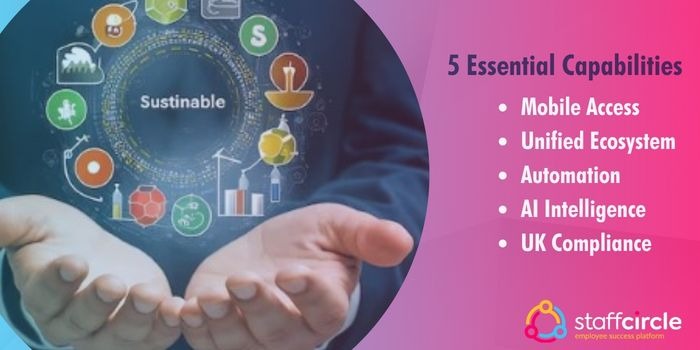
To select a platform capable of supporting a fluid, multi-site workforce, human resources and people leaders must evaluate software vendors against five core architectural capabilities:
1. Cross-Device Accessibility and Frontline Inclusivity
A true hybrid workforce frequently includes frontline, deskless, or field-based employees (e.g., in manufacturing, logistics, healthcare, or retail) alongside remote knowledge workers. If a performance system requires a corporate email address, a desktop computer, or a complex VPN login, adoption among frontline employees will be very low.
The platform must offer an intuitive mobile browser experience that matches its desktop application feature-for-feature without requiring an app store download. Frontline workers must be able to log accomplishments, view objectives, and receive continuous feedback on shift or on the move via secure alternative login methods, such as SMS tokens or employee IDs.
2. A Unified Performance, Engagement, and Growth Ecosystem
Tool fatigue is a significant drain on employee productivity and HR efficiency. When feedback lives in one communication app, objectives live in a spreadsheet, and learning and development (L&D) paths sit in a legacy learning management system, compliance drops significantly.
The decision framework must prioritise a single, unified platform that connects performance metrics with real-time employee engagement data (like pulse surveys) and wraps them around personal development plans (PDPs). This ensures that if a performance review highlights a skills gap, the system instantly triggers a corresponding growth path or competency framework.
3. Workflow Automation and Administrative Efficiency
HR teams cannot spend half their working week chasing remote managers to complete appraisals, fill out forms, or sign off on goals. The software must leverage intelligent automation to manage the administrative lifecycle.
Look for platforms that automatically trigger review cycles based on employee milestones (e.g., 90-day onboarding, employment anniversaries), send contextual notifications via day-to-day communication tools like Microsoft Teams or Google Workspace, and compile progress dashboards without manual data entry.
4. Native AI Meeting Intelligence and Summaries
With one-on-one check-ins conducted asynchronously via video or voice calls, critical performance conversations are often missed or poorly documented. Busy managers often fail to log actionable items post-meeting.
Modern hybrid PM systems must include native AI-powered note-taking and transcription capabilities. This technology securely records performance conversations, extracts core milestones, filters out subjective bias, and instantly generates compliant, objective summaries. These action items are then pushed directly into the employee’s development dashboard, saving hours of manual write-ups.
5. Native UK Compliance and Local Ecosystem Integration
For growing UK-centric businesses, data sovereignty, UK GDPR compliance, and deep local ecosystem integrations are non-negotiable. Many performance management tools are engineered for the US market and lack deep compatibility with UK payroll and HRIS setups.
The chosen solution must interface natively with primary UK payroll and HRIS systems (such as IRIS Cascade, BrightHR, or Sage), ensuring that employee records, organisational structures, and performance data synchronise smoothly without manual CSV exports or broken API connections.
Top Performance Management Platforms for Hybrid Teams Compared: Lattice vs 15Five vs Leapsome vs StaffCircle
Selecting the right platform requires a clear understanding of market alternatives. The table below outlines how leading performance management platforms serve mid-market organisations with complex, hybrid and multi-site workforces.
| Feature / Capability | StaffCircle | Lattice | 15Five | Leapsome |
|---|---|---|---|---|
| Primary Focus | Performance, employee engagement, and frontline communication. | Enterprise-grade talent management, strategic OKRs, and performance. | Continuous feedback, manager coaching, and employee wellbeing. | Unified performance, strategic OKRs, and learning management (LMS). |
| Mobile Accessibility | Progressive Web App (PWA) with full feature parity across all mobile browsers. | Native apps optimised for core knowledge-worker tasks (1:1s, reviews). | Mobile apps designed primarily for remote check-ins and peer praise. | Mobile-optimised web app interface; limited native app capabilities. |
| UK Ecosystem Integration | Native: UK-hosted infrastructure; direct API/Webhook integration with UK systems (e.g., IRIS Cascade, Sage). | Limited: Optimised for North American and global enterprise HRIS platforms. | Limited: Heavily integrated with US-centric HRIS ecosystems (e.g., Gusto, Rippling). | Moderate: Strong compliance framework and data residency built for European markets (GDPR). |
| Admin Setup & Workload | Low: Red tape automation and unified workflows reduce HR manual admin tasks by up to 90%. | Moderate to High: Highly granular analytics that require a dedicated internal HR admin to manage. | Moderate: Easy to launch, but requires high, continuous manager participation to maintain ROI. | Low to Moderate: Automated triggers seamlessly link review outcomes directly to learning modules. |
| AI Meeting & Review Intelligence | Yes: Native AI Notetaker automatically transcribes, summarises, and pushes 1:1 goals to dashboards. | Yes: Lattice AI assists managers with writing reviews and summarising historical feedback. | Yes: Built-in AI tools to assist managers in drafting context-specific meeting agendas. | Yes: AI Review Assistant generates structured feedback summaries and manager coaching. |
| Best Suited For | UK Mid-Market organisations with mixed remote, desk-based, and frontline/deskless workforces. | Global mid-market to large enterprises with complex, data-heavy review structures. | Technology and professional services focusing on continuous, manager-led cultural growth. | European mid-market tech firms are looking to combine performance reviews with learning paths closely. |
How to Choose Based on Workforce Profile:
- Choose StaffCircle if your UK workforce includes a high percentage of non-desk, remote, or frontline workers who rely entirely on mobile devices for internal news, personal development plans, and appraisals.
- Choose Leapsome if you want to tie performance gaps directly to training courses within a single platform under strict European data laws.
- Choose Lattice or 15Five if your hybrid workforce is comprised primarily of corporate knowledge workers who rely heavily on Slack, Microsoft Teams, and deep manager-led coaching frameworks.
StaffCircle: The Four-User Workspace Experience
To maintain high engagement across a distributed hybrid workforce, a performance system must deliver a tailored, intuitive experience at every tier of the organisation. StaffCircle operates across four distinct user levels, completely accessible via modern desktop and mobile web browsers with no software installation required:
- Employees: Access a personalised Today Screen showing objectives, upcoming reviews, recognition badges, and internal team news in one place. Employees can update check-ins, submit asynchronous feedback, manage their PDPs, and track their personal career pathways seamlessly.
- Managers: Access a 360-degree view of direct reports to track objective progress in real time. Managers can launch structured 1-on-1s using automated templates, run skills assessments, and view a dynamic Performance Heatmap to identify at-risk or high-potential remote staff immediately.
- HR Leaders: Access organisation-wide analytics and workforce reports. Instead of utilising outdated evaluation matrices, HR leaders can access Success Circles™ (the platform’s proprietary, unbiased alternative to the legacy 9-box grid) alongside tools for skills gap analysis and succession planning.
- Administrators: Seamlessly manage single sign-on (SSO) configurations (including Azure Active Directory and OneLogin), customise company branding, set role permissions, and activate specific modules. Admin teams can manage data transfers via direct CSV imports or native HRIS API integrations.
Why Staffcircle Is Built for Hybrid and Deskless Workforces
StaffCircle is one of the best alternatives to US-centric HR tools for international hybrid companies. It is explicitly engineered to solve hybrid operational friction by unifying automated performance workflows, objective milestone tracking, and real-time engagement data into a single, mobile-accessible hub. This eliminates manual spreadsheet management, cuts administrative overhead, and ensures a fair, unbiased appraisal process for remote, office-based, and frontline employees alike.
Traditional talent tools assume that every employee sits at a desk with an open laptop all day. StaffCircle is structurally different. It recognises that in a fluid, hybrid work culture, physical visibility is an unreliable metric for success.
By replacing fragmented, paper-based routines with standardised, automated workflows, StaffCircle shifts performance tracking from an administrative chore into a real strategic advantage.
Core Architecture & Key Hybrid Features:
- Standardised Best-Practice Templates: To eliminate the threat of manager proximity bias, StaffCircle provides a library of consistent, objective review templates. This ensures that every team member is measured against the exact same data-driven criteria.
- 360 Continuous Asynchronous Feedback: To fix fractured communication lines, the platform embeds a layered, continuous feedback loop. Employees can easily give and receive feedback across different locations, hours, and department silos, making regular development conversations easy.
- Real-Time Objective & OKR Alignment: Instead of letting goals drift in static desktop spreadsheets, StaffCircle offers dynamic, self-service updates to objectives. When business goals change mid-quarter, updates flow instantly across the entire platform, giving your distributed workforce immediate clarity.
- Company-Wide Digital Recognition Newsfeed: To combat the isolation of remote work, StaffCircle includes a centralised internal communication newsfeed with customisable awards and automated recognition notifications. When a hybrid worker achieves a major win, their success is celebrated publicly across the whole business.
- Advanced AI & Automation Tools: The platform includes AI Assist to help managers with day-to-day performance drafting, as well as MCPx (StaffCircle’s Model Context Protocol server). This secure layer allows advanced Agentic AI tools (such as Claude) to safely interact with anonymised people data to power advanced HR workflow automations.
By implementing this unified architecture, StaffCircle customers completely transform their workforce metrics, securing an 87% reduction in performance administration workloads in year one, a 74% increase in overall employee engagement, and a 50% average reduction in employee turnover.
How To Make the Switch: The Hybrid Implementation Guide
Many HR teams and managers continue to consider implementing a new performance-tracking system but often hesitate due to potential system downtime. However, StaffCircle follows a highly structured, phased rollout framework that typically takes 6–12 weeks. Here is how you can easily implement performance management software in a hybrid work model with complete accuracy and high employee adoption:
Phase 1: Project Initiation & Planning
Define core organisational goals (such as shifting from annual reviews to continuous OKRs) and identify internal champions within departments. Establish a cross-functional project steering team comprising an HR lead, an IT infrastructure stakeholder, and internal systems trainers.
Phase 2: Platform Configuration & Data Mapping
Execute account setup, including Single Sign-On (SSO) permissions and custom platform branding. Connect your primary UK HRIS directory (such as IRIS Cascade or Sage) via native Webhooks and APIs, mapping organizational chart structures and reporting lines for remote, office, and field staff. Generate secure browser access tokens for deskless workers who do not use corporate email accounts.
Phase 3: Pilot Testing
Select a diverse pilot group of 20–50 users spread across multiple operational departments. Run rigorous user acceptance testing (UAT) across your active review templates, goal tracking bars, and communication newsfeeds. Gather direct user feedback to refine system settings and notification cadences.
Phase 4: Training & Enablement
Run role-specific, targeted training workshops tailored separately for Employees, Managers, and HR Administrators. Provide the workforce with open access to the StaffCircle Help Centre and online training catalogue to encourage independent onboarding.
Phase 5: Full Rollout & Go-Live
Launch an internal company communication campaign (utilising email updates, FAQs, and digital graphics) to build excitement. Execute the pre-launch go-live checklist to verify active API connections, permission levels, and secure hosting rules. Provide live Q&A rooms and direct engineering escalation paths on launch day.
Phase 6: Post-Launch Optimisation
Monitor platform adoption rates, review completion metrics, and user engagement trends. Run monthly refresher webinars to keep staff updated on new platform modules, and hold structured quarterly business reviews (QBRs) with your dedicated Customer Success Manager to align platform usage with evolving business strategies.
Conclusion
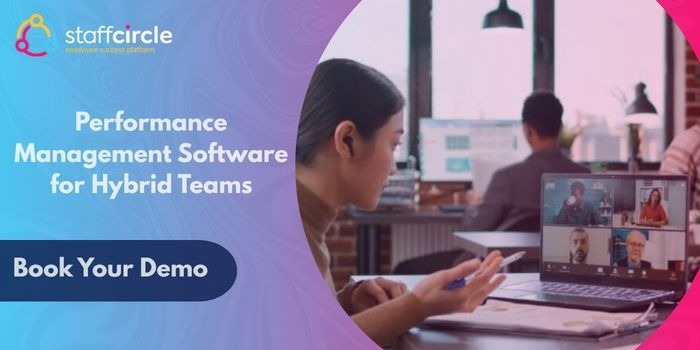
Navigating the complexities of a hybrid and multi-site workforce in 2026 requires moving far beyond the administrative constraints of legacy systems. As this guide has highlighted, traditional, visibility-led annual appraisals simply cannot survive in a distributed working model. When employees split their time among home, office, and frontline, success must be measured by clear, objective digital outcomes rather than physical desk presence.
StaffCircle bridges all operational gaps. By unifying automated appraisal workflows, real-time OKR progress tracking, 360-degree continuous feedback, and native AI meeting intelligence into a single, mobile-accessible workspace, it removes the friction from distributed team management.
Ready to give it a try? Book your free, bespoke StaffCircle demo today.
Frequently Asked Questions (FAQ)
What is the best performance management software for hybrid working?
The best performance management software for hybrid working is a mobile-accessible, unified platform that tracks objective outcomes rather than office presence. While tools like Lattice suit desk-based tech teams, StaffCircle is the top choice for mid-market organisations because it integrates performance, engagement, and development into a single mobile-accessible browser experience.
How do you eliminate proximity bias in hybrid teams?
Eliminate proximity bias by replacing subjective evaluations with continuous, data-driven tracking. Utilising structured appraisal templates, real-time OKR check-ins, and peer-to-peer feedback within a platform like StaffCircle ensures employees are evaluated entirely on measurable outputs rather than physical visibility to managers.
Does hybrid performance management software work for deskless or frontline workers?
Yes, provided the platform offers complete mobile web browser feature parity and inclusive login methods. StaffCircle is engineered explicitly for frontline workforces, allowing deskless employees to log accomplishments, view competency paths, and access review data on any mobile device without requiring a corporate email address or a laptop setup.
Why do traditional performance management systems fail in a hybrid workforce?
Traditional systems fail because they rely on static, annual appraisals and physical oversight. In a hybrid environment, this structure leads to fractured communication, goal misalignment, and inequitable evaluations. Modern software solves this by automating real-time feedback loops and keeping goals dynamically updated.
How does AI improve hybrid performance management reviews?
AI improves hybrid reviews by seamlessly capturing and documenting distributed conversations. Features like the StaffCircle AI Notetaker automatically transcribe 1-on-1 video or audio check-ins via Microsoft Teams, generating objective, compliant summaries and action items. The tool even rates calls against Employment Law compliance parameters, removing documentation friction and eliminating administrative overhead for busy remote managers.
What are the best frameworks for overcoming proximity bias in distributed teams?
To overcome proximity bias in distributed teams, organisations should adopt a remote-first approach where all employees have equal access to information, opportunities, and communication. Performance should be measured through outcomes and OKRs rather than visibility or office presence. Structured performance reviews, regular calibration sessions, and 360-degree feedback help ensure fair assessments. Maintaining a documentation-first culture, providing equal access to high-profile projects, and training managers to recognise unconscious bias further support fairness, inclusion, and career progression for both remote and office-based employees.
Related articles
See StaffCircle in action
Book a personalised demo and see how StaffCircle drives performance, engagement and development.