Free 9-Box Grid Generator
Plot your whole team on performance and potential in a couple of minutes. Build each potential rating from ability, aspiration and engagement, see the grid update as you go, and get practical actions for every box. Then download a branded PDF for your talent review. When you want the grid to stay current without re-scoring, Success Circles™ builds the same picture automatically from everyday activity in StaffCircle.

Who’s on your grid?
Rate each person on performance and potential. The grid updates as you go, and names stay on your device.
Potential is High only when all three factors are High, and Low when two or more are Low. Rating them separately can make each placement easier to evidence.
Dashed potential is estimated from a single rating, so those people are left off the watch list. Once you change ability, aspiration or engagement for someone, all three of their factors count as your ratings.
Name, Performance, Potential — or Name, Performance, Ability, Aspiration, Engagement. Use Low/Moderate/High, L/M/H or 1/2/3. Separate with commas or tabs (straight from Excel).
High-potential bench
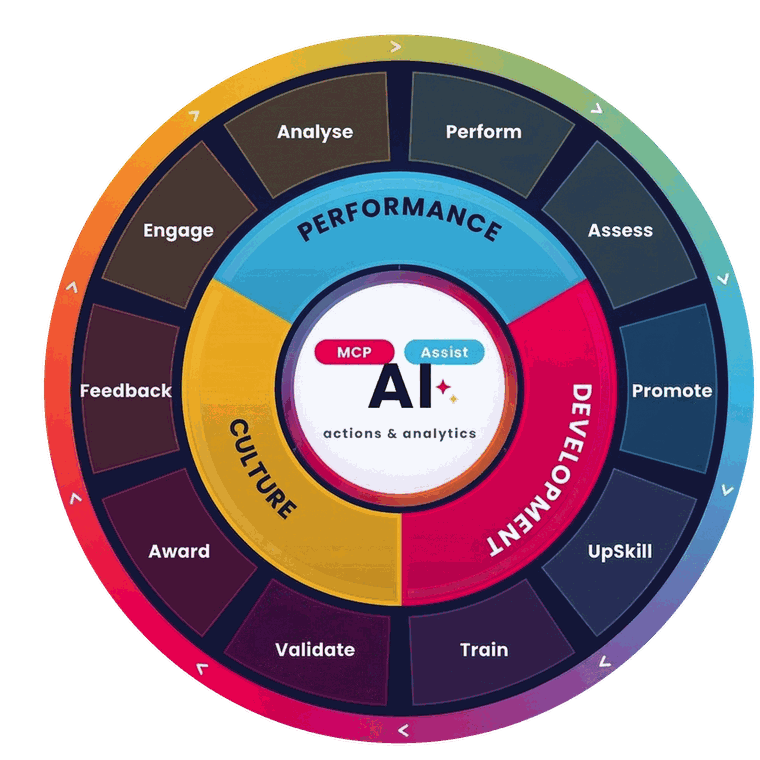 Keep this grid liveSuccess Circles™ updates it from everyday evidence, with no re-scoring.
Everyone, by performance and potential
Show the grid as a table
| Box | People | Share | Who |
|---|
Pattern checks
Actions for every box
Want this grid to stay current between talent reviews? See how Success Circles™ does it automatically →
How to use the 9-box grid generator
The 9-box grid plots each person on two axes: their current performance and their future potential. Each axis has three levels, which gives nine boxes.
- Add your team. Type names or initials, or paste a list from a spreadsheet. Names stay in your browser.
- Rate performance. Low means the person does not meet the requirements of the role, moderate means they partly meet them and high means they fully meet them. Base it on review evidence, not memory.
- Rate potential. Either enter one rating, or rate ability, aspiration and engagement separately and let the tool combine them. The second option can be easier to evidence in a calibration meeting.
- Read the grid and act. The tool flags patterns worth a second look and suggests actions for every box that has people in it.
What each box of the 9-box grid means
Box names vary between organisations. The labels below are descriptive and neutral. Use them to start a conversation, never as a fixed label on a person. Placement is a snapshot: review it at least once a year, because ability, engagement and aspiration change.
| Result | Band | What it usually means |
|---|---|---|
| High perf · high potential | Ready for more | Delivering now and showing the ability, aspiration and engagement for a bigger role. (descriptive label, StaffCircle) |
| Moderate perf · high potential | Rising talent | Capable and ambitious, still growing into the current role. (descriptive label, StaffCircle) |
| Low perf · high potential | Untapped potential | Strong ability and drive, but not yet delivering. Something may be getting in the way. (descriptive label, StaffCircle) |
| High perf · moderate potential | Strong performer | Delivering well; growth is more likely in depth than in a big step up. (descriptive label, StaffCircle) |
| Moderate perf · moderate potential | Core contributor | Reliable contributors who keep the team running. (descriptive label, StaffCircle) |
| Low perf · moderate potential | Inconsistent performer | Some potential, but performance is below what the role needs. (descriptive label, StaffCircle) |
| High perf · low potential | Trusted expert | Excellent in the current role and likely to stay at this level by choice or by fit. (descriptive label, StaffCircle) |
| Moderate perf · low potential | Steady contributor | Doing a fair job and settled in the role. (descriptive label, StaffCircle) |
| Low perf · low potential | Below expectations | Not meeting the role's requirements and not currently showing growth potential. (descriptive label, StaffCircle) |
Methodology and sources
The talent 9-box puts current performance on one axis and future growth potential on the other. SHRM describes it as a tool introduced in the 1970s that is still a staple of talent assessment and succession planning. It also warns that the line between performance and potential is often unclear, which can lead to subjectivity and bias.
To make potential less of a hunch, the generator can build it from three factors. In Harvard Business Review, Jean Martin and Conrad Schmidt, drawing on Corporate Leadership Council research, recommend explicitly testing candidates for ability, engagement and aspiration, and found that shortcomings in even one of the three can dramatically reduce their chances. Our rule follows that: potential is high only when all three are high, low when two or more are low, and moderate otherwise. This is a suggested starting point, not a published standard.
The performance and potential level descriptions follow AIHR's practitioner guide. The pattern checks (for example, half or more of a team of five or more in one box) are suggested starting points for discussion, not benchmarks. AIHR recommends comparing people across teams, not just within one, and asking for evidence behind every rating. CIPD stresses that the methods used to judge potential successors should be transparent and objective.
Sources
The 9-box grid and Success Circles™: companion now, successor next
The 9-box is a good way to start a talent conversation, and this generator makes it quicker and fairer. Its limits are the ones SHRM points to: placements are made by hand, rest on opinion and start to go out of date as soon as the talent review ends. Success Circles™ is StaffCircle’s answer: a live, evidence-based view of performance, potential and development, built from what already happens on the platform.
| 9-box grid | Success Circles™ | |
|---|---|---|
| How it is built | Managers rate each person by hand | Distilled automatically from reviews and 360 feedback, objectives and check-ins, recognition and awards, and development and training |
| How current | A snapshot from the last talent review | Always current, with no annual re-scoring |
| Based on | Opinion, calibrated in a meeting | Evidence from everyday signals |
| What you see | Nine boxes | Future leaders, flight risks and ready successors at a glance, with bench strength by team |
| Asking questions | Read the grid | Ask AI Assist in plain English, such as “Who’s ready to step up if we lose a team lead?” |
How to use them together
Use this generator for your next talent review and agree the conversation and actions. Then let Success Circles™ keep the picture current between reviews, so the next one starts from evidence rather than memory. StaffCircle reports that 67% of Success Circles™ users find future planning and spotting succession opportunities more effective.
Explore Success Circles™ → Watch: 9-box grid vs the Success Circle (video) →
Keep the 9-box conversation going. Let Success Circles™ keep it current.
Success Circles™ collect and distil every activity on StaffCircle, from reviews and 360 feedback to objectives, recognition and training, into a live view of performance, potential and development. No spreadsheets and no manual scoring.
- Evidence-based, not opinion-based, placement
- Always current, with no annual re-scoring
- Future leaders, flight risks and ready successors at a glance
- Targeted development plans for every person
9-box grid questions, answered
What is a 9-box grid?
A 9-box grid is a talent tool that plots employees on two axes: current performance and future potential. Each axis has three levels, so everyone lands in one of nine boxes. HR teams use it in talent reviews and succession planning to see who is ready for more, who needs support and where the bench is thin.
How do you rate potential fairly in a 9-box?
Split potential into parts you can evidence. Research by the Corporate Leadership Council, published in Harvard Business Review, recommends testing ability, engagement and aspiration separately. Rate each one on evidence such as reviews, 360 feedback and career conversations, then compare ratings across managers before you finalise them.
What is the difference between performance and potential?
Performance is how well someone does their current job today. Potential is how likely they are to succeed in a bigger or more complex role in future. Strong performers are not automatically high potential, which is why the two are rated separately.
How often should you update a 9-box grid?
AIHR suggests revisiting the grid every six to 12 months, and Harvard Business Review authors Martin and Schmidt advise re-evaluating top talent annually. Revisit placements sooner after a big change, such as a new role, a long absence or a restructure, because ability, engagement and aspiration can change.
Should employees know where they sit on the 9-box?
Be open about the process: CIPD says transparency is key in the methods used to judge potential successors. AIHR advises care when sharing potential ratings, so one option is to share the development conversation and the agreed actions rather than the box label itself, so people focus on what to do next.
Is the 9-box grid still worth using?
SHRM calls it a staple of talent assessment and succession planning, but notes that potential is hard to measure objectively, which can lead to subjectivity and bias. If you use it, keep the grid simple and fix the inputs: evidence each rating, calibrate across managers and turn every placement into an action. The generator is built around those three habits. When you want the picture to stay current between reviews, Success Circles™ is the live, evidence-based successor.
What is the best alternative to the 9-box grid?
If the 9-box works as a conversation starter, keep it and fix the inputs, as this generator does. If the problem is that the grid is manual and out of date as soon as it is finished, use a live model. StaffCircle’s Success Circles™ builds an evidence-based view of performance, potential and development automatically from reviews, 360 feedback, objectives, recognition and training, so placements stay current between talent reviews.
Is this 9-box grid generator free?
Yes. The grid, the pattern checks and the actions are free with no sign-up, and names never leave your browser. If you want the PDF report, we ask for your name, company and work email.
See StaffCircle in action
Book a personalised demo and see how StaffCircle drives performance, engagement and development.