The UK’s £820M Youth Jobs Scheme: What Most Organisations Can’t See
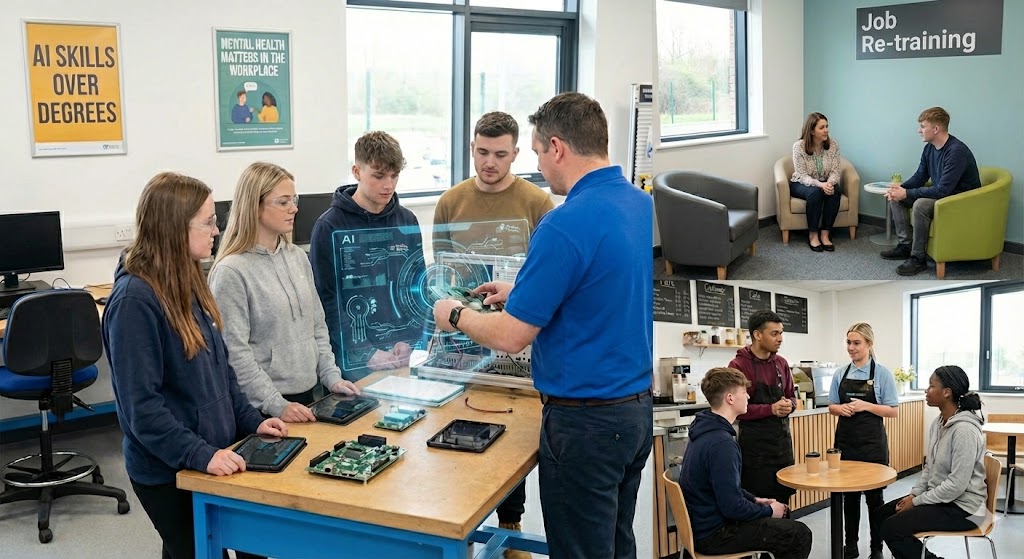
I’ve been watching the UK government’s new youth employment initiative unfold, and the numbers tell a story most people are reading wrong.
The headline is £820 million for 350,000 training placements and 55,000 guaranteed jobs. The real story is buried in the diagnostic data: only 38% of the 948,000 young people classified as NEET are actually job-seeking.
The other 62% aren’t in the market at all. They’re economically inactive—not working, not seeking work, not available for work.
This isn’t a jobs problem. It’s a systems problem.
The Infrastructure Failure No One Is Naming
Here’s what changed: the proportion of disabled NEETs citing mental health as their main barrier has nearly doubled since 2011—from 24.3% to 42.6% in 2025.
Organisations are still building programs around motivation and opportunity when the actual constraint is capacity. You can’t workshop your way out of structural dysfunction.
The government’s response—dedicated support sessions, intensive coaching, benefit sanctions—addresses symptoms. The underlying architecture remains unchanged.
The perceived diminishing value of Higher Education
Many young people are avoiding higher education completely because they don’t want to be saddled with huge levels of debt. Some degrees are viewed as almost worthless or irrelevant by employers, and students on those degrees are becoming disillusioned – asking themselves if all the time and debt are all worth it if there is no job at the end of it. Most university degrees are not preparing our young people for the new reality of work.
What the Data Actually Shows
The proportion of 18 to 24-year-olds unemployed for over 12 months is at its highest level in a decade. Time spent out of work early in a career creates long-term negative effects on employment prospects and earnings.
Every month of inaction compounds.
Meanwhile, reducing youth NEET rates to Netherlands levels could generate £69 billion in GDP. That’s not a social program, that’s infrastructure investment with measurable ROI.
But most organisations don’t have the systems, processes or diagnostic capability to tell the difference between interventions that scale and the ones that don’t.
The Skills-Based Hiring Shift Organisations Are Missing
LinkedIn predicts that by 2030, over 75% of entry-level tech roles will prioritize skills over degrees. The World Economic Forum found that 39% of existing skill sets will be transformed or become outdated by 2030.
Organizations preparing for skills-based hiring by 2030 are already late.
The infrastructure should exist now. Work experience programs show measurable returns—Career Academies produced 11% higher yearly earnings eight years after graduation. The evidence exists. The question is whether you treat this as infrastructure or charity.
What This Means for Your Organisation
The government scheme targets construction, hospitality, and health and social care. These sectors need bodies. But the structural issue applies everywhere: you can’t fix a design problem with a training program.
If your organisation is waiting for government initiatives to solve your talent pipeline issues, you’re misreading the system. The real opportunity is building the diagnostic capability to identify which interventions actually work in your context.
Just over one-third of youth employment programs worldwide show significant positive impact. The issue isn’t whether interventions work. The issue is which design patterns scale.
Most organisations can’t tell the difference because they’re measuring outputs instead of reading organisational health as signal.
The £820 million scheme will place people in jobs. Some will stick. Most won’t. The ones that do will succeed because the receiving organisation already built the infrastructure to support them.
At StaffCircle, we are helping Organisations deliver well structured onboarding, performance management, employee development and coaching systems and processes. For more information check out other other blogs, register for our latest webinar or book a call to see how we can help.
Related articles


See StaffCircle in action
Book a personalised demo and see how StaffCircle drives performance, engagement and development.