How to Systemise an Employee Retention Strategy in 2026
For decades, human resources departments treated employee retention like an emergency room. When a top performer handed in their resignation, HR would scramble. They would whip up a sudden counter-offer, promise a promotion, or schedule an awkward exit interview to figure out what went wrong.
Today, this reactive retention approach is broken. The cost of replacing a professional-level employee has skyrocketed to an average of 1.5 to 2 times their annual salary when accounting for recruitment fees, onboarding time, lost productivity, and disrupted client relationships.
In a hybrid and distributed working landscape, you cannot rely on casual office chats to judge if someone is happy. If your retention strategy is just a collection of nice ideas, like casual Fridays, occasional bonuses, or generic wellness apps, turnover will continue to hit your bottom line. To keep your best people, you need to transition from a reactive strategy to an automated, predictable, and measurable retention system.
Why Employee Retention Needs a System, Not Just a Strategy
Well, the very first thing you need to know is why employees are leaving. Are policies bad? Is office culture toxic? Are you paying them fairly?
You can’t give a direct answer because there are different reasons for different employees. For example:
- If pay is high but the office culture is bad = employee leaves
- If the manager is supportive but career growth is limited = employee eventually leaves.
- If promotions are promised but never delivered = employee loses trust and leaves.
And there are three major points of failure:
The Flaw of Manager Intuition: Managers are busy. If an employee is hitting their targets and never complains, a manager will naturally assume everything is fine. However, data shows 90% of employees in the UK are ‘quiet quitting’ as they seek out other opportunities and avoid speaking up about workplace frustrations in front of office management.
Tool Fatigue and Fragmented Data: HRs and managers are still using spreadsheets, a separate annual survey tool, and notebooks to record 1-on-1 meeting notes. This simply fragments data and makes it hard to organise or review.
Lack of Consistency: When a business gets busy, non-urgent tasks like development discussions and regular 1-on-1 catch-ups are often the first things managers drop. Simply, there are no consistencies.
Here, you need to balance each part, and for that, you need an employee retention system.
What is an employee retention system?
An employee retention system is a structured framework that combines performance management, employee feedback, career development, analytics, and HR software to identify disengagement early and reduce voluntary turnover.
As a founder of 3 SaaS businesses, I deeply understand the value of time and efficiency. So, when we designed StaffCircle, our goal was to automate all the complex processes to take out as much admin work for HR leaders and managers. And managing retention is one of them. HR leaders still rank retention as their number one workforce challenge, with 66% citing it as a top concern.
If you are curious how it works, you can book a 1-on-1 demo consultation with me.
The 5 Pillars of an Employee Retention System
According to the study published by Harri through online surveys from 3,000 currently employed frontline global workers, we can look into various factors that affect the retention system. This includes simple terms fair wages, great benefits, and a supportive office culture and manager.
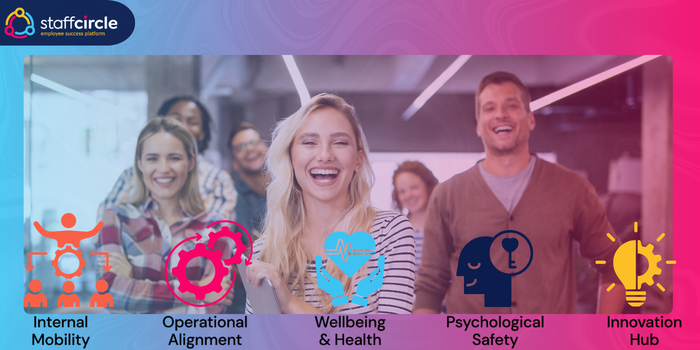
To maintain a reliable employee retention system, there are five core pillars built around those terms. So, before you implement anything, you have to understand these pillars.
Pillar 1: Continuous, Layered Feedback Loops
A single annual engagement survey is the biggest mistake if you wish to understand employee engagement. By the time survey results are collected, analysed, and acted upon, the issues that caused frustration may have existed for months. Valuable employees may have already disengaged, started looking elsewhere, or even resigned.
That’s why we suggest it be continuous with feedback, allowing employees to share concerns, ideas, and aspirations throughout the year. It can be done via:
- Weekly/Bi-weekly 1-on-1s: Focused on clearing immediate operational hurdles and building rapport.
- Monthly Pulse Surveys: Quick, 2-minute check-ins to track team sentiment across specific areas like workload, tools, and leadership.
- Quarterly Reviews: Structured reflections on performance, well-being, and long-term career aspirations.
Each feedback layer serves a different purpose and helps identify and resolve problems early.
Pillar 2: Objective, Transparent Career Pathways
Everyone wants career growth, and when you can provide that to your employees, it’s obvious for them to leave. According to the LinkedIn Workplace Learning Report, 94% of employees say they would stay longer if employers invested in career development.
Your retention system must give clear outlines of individual employee’ career tracks within your company. This way, they’ll be able to analyse their current skill levels, certifications, or performance metrics.
In StaffCircle, we have something called Success Circles™, which offers a visual representation of skill levels for each individual. Users can simply log into their account and see how they are doing. If an employee is lacking somewhere, they can get relevant skill-upgrading courses from trusted LMS platforms, like Udemy. The best part is that Success Circles™ update in real time automatically. In other words, employees have control over their career growth.
Pillar 3: Data-Driven Goal Alignment (OKRs)
To increase employee engagement, you need an Objectives and Key Results (OKR) framework. When an individual can see exactly how their day-to-day work directly impacts company goals, they get a sense of purpose.
Let’s look at a simple example.
Imagine a cashier at a retail store. Without OKRs, the cashier might think:
“I scan items and take payments all day.”
That’s all they see. They complete tasks but may not understand how their work contributes to the company’s success.
When an OKR framework is introduced, that changes.
Company Objective: Make customers happier so they keep shopping with us.
Company Key Result: Reduce checkout waiting times from 8 minutes to 4 minutes.
Cashier Goal: Serve customers in under 2 minutes while maintaining accuracy.
Now, the cashier can clearly see how their daily work contributes to a larger goal. Instead of simply scanning items, they understand that faster service helps reduce queues, improves the customer experience, and encourages shoppers to return.
They begin to think:
“If I serve customers faster, waiting times go down. Customers have a better experience. They come back more often. That helps the company grow.”
This connection gives employees a stronger sense of purpose and makes them feel like an important part of the organisation rather than just another worker completing tasks.
In StaffCircle, assigning these OKRs to each role and employee is easy. Once the objectives are completed, candidates can mark them as done. If an employee is completing their objectives on time, their performance will be tracked and updated in their Success Circles™ in real time. It is a great solution for employee retention in healthcare, manufacturing, retail, hospitality, construction, SaaS companies, and call centres.
Pillar 4: Asynchronous Peer-to-Peer Recognition
Workplace culture can easily degrade in hybrid or multi-site teams. A core pillar of your system should be a public recognition engine. Allowing team members to send digital badges and shout-outs aligned with company values builds appreciation, counters isolation, and reinforces positive behaviors asynchronously. Employees who receive high-quality recognition are 45% less likely to leave within two years.
Pillar 5: Proactive, Multi-Channel Communications
In a distributed workforce, a lack of clear communication breeds anxiety and rumours. A systemised approach ensures that company news, leadership updates, and strategic changes reach every single employee simultaneously, whether they are sitting at a laptop in HQ or working a shift via a mobile web browser on a production floor.
Keeping it in mind, StaffCircle is made for users to feel like a social media feed. They can scroll down and engage with the achievements posted by other employees and leaders. It makes it easier to collect feedback and opinions from a large pool. Companies using StaffCircle have reported 74% higher employee engagement.
How to Track Retention Risk Using Performance Data
Employees rarely quit out of the blue. Before a resignation letter lands on your desk, there comes a lot of change in an individual’s behaviour and performance. A systemised retention strategy has to track these changes by combining performance metrics with engagement indicators.
When analysing your workplace data, look out for these three critical patterns:
The Sinking OKR Trend
If a historically high-performing employee suddenly misses their objectives and quarterly goals frequently, it is rarely a skills issue. More often, it is a sign of disengagement or severe burnout. When goal progression drops alongside a decrease in 1-on-1 meeting attendance, the system should instantly flag that employee for a supportive manager intervention.
The Feedback Drop-off
Watch the participation rates in your pulse surveys and team channels. When an employee stops answering pulse check-ins, leaves 1-on-1 preparation forms blank, or pulls back from peer-to-peer recognition, they are often mentally checking out. This drop in engagement is an objective leading indicator of turnover risk.
The 90-Day Probation Dip
Data across mid-market organisations shows that up to 30% of all staff turnover occurs within the first 90 days of employment. If an onboarding system does not measure how quickly new hires are adjusting to the culture and what issues they’re facing, there’s a high risk of early departure. Companies with structured onboarding improve new-hire retention by 82% and productivity by over 70%.
One of the best parts of StaffCircle is that you can track these retention risks easily through clear, actionable dashboards. The platform uses centralised, live performance analytics to monitor consistently missed objectives, lack of peer recognition, drops in engagement surveys, missed check-ins, and uncompleted reviews.
Step 1: Navigate to the centralised Employee Analytics dashboard to get an overview of your workforce, including engagement, performance, retention risks, and other key workforce metrics.
Step 2: Use the built-in Goal Management and OKR dashboards to monitor individual and team progress in real time. The system automatically flags employees who are falling behind on goals or showing signs of performance decline.
Step 3: Review continuous feedback, recurring check-in notes, peer recognition, and performance evaluation data. Use pulse surveys and engagement insights to measure employee sentiment. Low feedback scores, declining engagement, or infrequent one-on-one meetings often indicate an increased risk of voluntary turnover.
Step 4: Identify employees with limited career progression by reviewing their personal development plans. Update their desired career paths and assign learning activities, tasks, or worksheets to address skill gaps and support long-term growth.
Automating Your Retention Workflows with StaffCircle
Building a retention system from scratch can feel overwhelming for a busy HR team. It takes around 3 to 9 months to build an employee retention system. But what if I tell you, it can be set up in minutes and a few hours. In fact, organisations using StaffCircle see 57% lower employee turnover.
This is where specialised software platforms like StaffCircle come in. StaffCircle automates these complex data points and workflows into a single, cohesive dashboard.
1. Unified Success Profiles
Every company has a data fragmentation problem which can be resolved with StaffCircle. You can do performance management with culture and engagement updates under one roof. An employee’s profile brings together their OKR progress, 360-degree feedback, survey responses, and competency maps. This gives HR and management an objective, real-time look at an individual’s overall alignment and well-being.
2. The AI Notetaker: Protecting 1-on-1 Continuity
In a hybrid workplace, critical talking points during video check-ins often go unrecorded. StaffCircle’s native AI Notetaker securely transcribes and summarises 1-on-1 meetings via Microsoft Teams or audio calls. It pulls out agreed actions, flags mentioned development goals, and logs them directly onto the employee’s dashboard. This keeps development commitments visible and top-of-mind for both parties, ensuring promises do not slip through the cracks.
3. Progressive Web App (PWA) Mobile Parity
Traditional desktop platforms struggle to engage non-desk or frontline workers, which often leads to high turnover in those roles. StaffCircle solves this by delivering full feature parity through a progressive web app layout. Shift workers, field teams, and remote staff can update their goals, check company news, and complete pulse check-ins from any mobile web browser on shift. It means no corporate email login troubles or dedicated desktop stations.
4. Automated Review Workflows
StaffCircle removes the administrative burden of chasing paperwork. The platform automatically triggers reviews based on specific milestones, such as probation tracking dates or work anniversaries. It sends out contextual notifications through the communication channels your employees already use daily, like Microsoft Teams or Google Workspace, helping companies achieve on-time review completion rates of up to 96%.
90-Day Retention Programme Checklist
To turn these concepts into action, use this 90-day checklist to step-by-step implement a systemised retention plan or framework across your business.
Days 1 to 30: Consolidate Data and Set Up baselines
- [ ] Audit Your Existing Tools: Identify where your employee reviews, goal tracking, and survey data live. Work to eliminate separate applications to reduce tool fatigue.
- [ ] Establish a Base Pulse Cadence: Launch a simple, recurring monthly pulse survey across the company covering foundational areas: manager support, alignment, and tool access.
- [ ] Map Out Critical Roles: Pinpoint the roles that would cause immediate operational bottlenecks if left vacant, and audit their current succession paths.
Days 31 to 60: Structure Standards and Career Paths
- [ ] Standardise 1-on-1 Check-ins: Create a uniform template for 1-on-1 meetings that requires inputs from both managers and employees before the call begins.
- [ ] Build Competency Tracks: Clearly outline the required skills and performance targets for advancement across your key departments.
- [ ] Launch Values-Driven Recognition: Open a central channel or social feed where team members can publicly celebrate peer wins and contributions.
Days 61 to 90: Automate Workflows and Review Trends
- [ ] Connect Your HRIS Systems: Integrate your performance platform with your core UK HRIS (such as IRIS Cascade or Sage) via APIs to ensure your employee directory stays synchronised automatically.
- [ ] Automate Milestone Reviews: Set up automated triggers for probation timelines, work anniversaries, and role transitions.
- [ ] Analyse Initial Sentiment Trends: Review your quarterly data to identify teams with dropping engagement scores or slipping goal progression, and deploy supportive coaching intervention plans.
What Causes Staff Turnover? How to Measure Retention Rate?
According to Gallup, 42% of employee turnover is preventable, yet many organisations fail to address the underlying causes. To fix a turnover problem, you must understand exactly how to calculate it and what underlying issues are driving people to leave.
The Real Causes of Employee Turnover
While exiting employees frequently cite a higher salary on their way out the door, compensation is usually just the final trigger. According to reports, Only 16% of employees leave primarily because of pay or benefits. Most resign due to engagement, culture, management and well-being issues. The underlying root causes that make an employee start looking at job boards in the first place typically fall into four categories:
- Invisible Career Pathways: The number one driver of voluntary turnover among high performers is feeling trapped. If a worker cannot look ahead and see an objective, competency-based roadmap for their next 12 to 24 months within your business, they will find that progression elsewhere.
- Fractured Manager Relationships: The old phrase “people don’t quit jobs, they quit managers” holds true. A lack of consistent feedback, sudden micro-management, or missed 1-on-1 check-ins leave employees feeling isolated and unsupported.
- Burnout and Tool Friction: Expecting high output without providing the necessary flexibility, clear goal boundaries, or proper operational tools causes sustained stress. Over time, this administrative and mental friction turns into quiet quitting and eventual resignation.
- Proximity Bias and Isolation: In hybrid or multi-site teams, out-of-sight workers can easily feel overlooked for promotions or key projects in favour of desk-bound office staff. When transparency drops, toxic imbalances and cultural disconnection thrive.
How to Calculate Your Retention and Turnover Metrics
To evaluate whether your workplace systems are working effectively, you need to rely on two foundational human resources formulas: Retention Rate and Turnover Rate.
Retention Rate Formula
This metric tracks the percentage of specific workers who remained with your business from the exact start to the absolute end of a given tracking window (e.g., a quarter or a fiscal year). It excludes anyone hired during that time frame.
To keep your system data-accurate, use these standard human resource formulas:
Retention Rate = (Number of Employees who Stayed Entire Period) \ (Number of Employees at Start of Period) x 100
Example: If you start the year with 100 employees and 85 of those exact same individuals are still with you on December 31st, your retention rate is 85%.
2. Employee Turnover Rate
This metric measures the total proportion of your workforce that parted ways with the business during a set time frame. It accounts for your average headcount, including new hires who joined and left within that window.
Turnover Rate = (Total Number of Leavers During Period) \ (Average Number of Employees During Period} x 100
Example: If you lost 15 employees over a period where your average headcount fluctuated around 100 staff members, your turnover rate is 15%.
Pro Tip: Always separate voluntary turnover (employees choosing to resign) from involuntary turnover (layoffs or terminations). Tracking your voluntary turnover among high-performing staff gives you an unvarnished look at the health of your workplace culture.
Employee Retention vs Employee Engagement: What’s the Difference?
Employee engagement measures how emotionally committed and motivated employees are while they work for your organisation. Engaged employees are enthusiastic about their work, contribute ideas, collaborate with colleagues, and often go beyond their basic job responsibilities.
Employee retention, on the other hand, measures whether employees choose to remain with your company over time. It is usually expressed as a retention rate or turnover rate.
Think of it this way:
- Engagement answers “How invested are employees today?”
- Retention answers “Will they still be here next year?”
A company can have highly engaged employees who eventually leave because they receive better career opportunities elsewhere. Likewise, employees may stay with a company despite being disengaged because of economic uncertainty, location, or limited job options. While this may improve retention figures in the short term, it rarely leads to high productivity or long-term business success.
The two concepts are closely connected. Strong engagement generally increases retention because employees who feel valued, supported, and aligned with company goals are less likely to look for opportunities elsewhere. However, engagement alone is not enough. Organisations also need competitive pay, career development, effective managers, recognition programmes, and transparent communication to retain top talent.
Employee Retention vs Employee Engagement
| Employee Engagement | Employee Retention |
|---|---|
| Measures employee motivation and commitment | Measures how many employees stay with the organisation |
| Focuses on daily employee experience | Focuses on long-term workforce stability |
| Measured through engagement surveys, pulse surveys, feedback, and participation | Measured using retention rate and turnover rate |
| Influenced by managers, culture, recognition, and meaningful work | Influenced by engagement, career growth, compensation, leadership, and workplace culture |
7 Common Employee Retention Mistakes That Increase Staff Turnover
Even organisations with the best intentions can struggle to retain employees if their retention strategy has fundamental gaps. Many businesses focus on perks or salary increases while overlooking the underlying factors that drive long-term employee commitment. Avoiding these common mistakes can significantly improve retention rates and reduce voluntary turnover.
1. Relying Only on Annual Engagement Surveys
An annual employee survey provides a snapshot of how people felt months ago, not how they feel today. By the time the results are analysed and action plans are created, valuable employees may have already become disengaged or accepted another job offer.
Instead, combine annual surveys with monthly pulse surveys, regular one-on-one meetings, and continuous feedback to identify issues before they become resignation letters.
2. Failing to Provide Clear Career Pathways
Employees want to understand how they can grow within your organisation. When promotions, skill requirements, and development opportunities are unclear, ambitious employees often look elsewhere for career progression.
Provide transparent career frameworks, competency maps, learning opportunities, and development plans so employees can see their future within the company.
3. Ignoring Burnout Warning Signs
High-performing employees rarely resign without showing warning signs first. Declining productivity, missed goals, reduced participation, increased absenteeism, or lower engagement often indicate burnout rather than poor performance.
Managers should monitor these trends through regular check-ins, performance dashboards, and employee feedback instead of waiting until problems become severe.
4. Treating Onboarding as a One-Day Event
Many organisations invest heavily in recruitment but provide very little support after an employee’s first week. Poor onboarding leaves new hires feeling disconnected, uncertain about expectations, and less likely to stay beyond their probation period.
A structured onboarding programme with regular check-ins, clear goals, training, and manager support helps employees integrate more quickly and improves early retention.
5. Overlooking Employee Recognition
Employees who consistently deliver good work but rarely receive recognition often begin to feel undervalued. Recognition does not always need to be financial. Public appreciation, peer recognition, constructive feedback, and celebrating achievements all contribute to stronger engagement and loyalty.
Building recognition into everyday work helps reinforce positive behaviours and creates a more supportive workplace culture.
6. Assuming Every Manager Knows How to Retain Employees
Many managers are promoted because of their technical expertise rather than their leadership skills. Without proper training, they may avoid difficult conversations, provide inconsistent feedback, or fail to support employee development.
Investing in manager coaching, communication skills, and leadership development enables managers to build stronger relationships and improve retention across their teams.
7. Making Decisions Without Workforce Analytics
Retention problems are difficult to solve without reliable data. Organisations that rely on assumptions rather than measurable indicators often identify issues too late.
Tracking engagement trends, performance goals, feedback participation, absenteeism, career progression, and turnover metrics allows HR teams to identify risks early and take proactive action before valuable employees decide to leave.
Key takeaway: Most employee turnover is not caused by a single event. It usually results from multiple small problems that go unnoticed over time. A successful employee retention strategy combines continuous feedback, career development, effective leadership, recognition, structured onboarding, and workforce analytics to address these issues before they lead to resignation.
Employee Retention Checklist
✔ Monthly pulse surveys
✔ Weekly manager check-ins
✔ Career progression plans
✔ OKRs
✔ Recognition programme
✔ Learning plans
✔ Workforce analytics
✔ Stay interviews
✔ AI-powered dashboards
Bottom Line
Employee retention is no longer something organisations can manage through annual surveys, counter-offers, or exit interviews alone. In today’s hybrid workplace, retaining top talent requires a proactive, data-driven system that identifies disengagement before employees decide to leave.
The organisations that achieve the highest retention rates combine continuous feedback, transparent career development, clear performance goals, employee recognition, workforce analytics, and AI-powered HR technology into a single, connected strategy. Rather than reacting to resignations, they continuously measure employee experience, identify potential risks, and support employees throughout their careers.
Whether you’re building a retention strategy from scratch or improving an existing one, the goal remains the same: create an environment where employees can grow, feel recognised, and see a future.
Frequently Asked Questions (FAQ)
How does a systemised retention strategy prevent proximity bias?
Proximity bias happens when managers unconsciously favour the employees they see physically every day over remote or hybrid workers. A systemised approach counters this by tracking performance through objective data, such as real-time OKR milestones and multi-source 360 feedback, rather than relying on office visibility.
What is a healthy employee turnover rate?
While target metrics vary by industry, an overall annual turnover rate between 10% and 15% is generally considered healthy across mid-market businesses.
Can small HR teams manage an automated retention system?
Yes, in fact, small HR teams often benefit the most from automation. By letting a platform like StaffCircle handle manual reminders, trigger review schedules, and flag engagement risks, a lean HR team can step away from paperwork and focus on high-impact initiatives like manager coaching and culture building.
How often should we update our competency frameworks?
Competency frameworks should be agile, living blueprints. Review them every 12 to 18 months to ensure they stay aligned with evolving technology, market conditions, and your company’s long-term business strategy.
What is the difference between employee retention and employee turnover?
Employee retention and employee turnover measure opposite aspects of workforce stability. Employee retention measures the percentage of employees who remain with an organisation during a specific period, while employee turnover measures the percentage of employees who leave during that same period.
A high retention rate generally indicates employees are choosing to stay, whereas a high turnover rate may suggest problems such as poor management, limited career opportunities, burnout, or low employee engagement.
HR teams should monitor both metrics together. Retention shows how successful an organisation is at keeping its workforce, while turnover helps identify how frequently employees are leaving and whether intervention is needed. Analysing both provides a more complete picture of organisational health and employee satisfaction.
What HR metrics predict employee resignations?
Employees rarely resign without showing warning signs first. Several HR metrics can help identify employees who may be at risk of leaving before they submit their resignation.
Some of the most useful predictive metrics include declining goal completion, reduced participation in pulse surveys, missed one-on-one meetings, lower peer recognition, decreasing engagement scores, increased absenteeism, slower career progression, declining performance, and reduced participation in learning and development activities.
These indicators become even more valuable when analysed together rather than individually.
How does AI help employee retention?
Artificial intelligence helps improve employee retention by identifying patterns that humans may overlook and automating time-consuming HR processes. Instead of waiting until an employee resigns, AI analyses workforce data to detect early signs of disengagement, burnout, declining performance, or turnover risk.
Modern HR platforms like StaffCircle can automatically monitor employee goals, engagement surveys, feedback, one-on-one meeting notes, recognition activity, learning progress, and performance trends. AI can then alert managers when an employee may need additional support or career development.
AI also reduces administrative work by generating meeting summaries, scheduling performance reviews, analysing employee feedback, and providing workforce insights through real-time dashboards. This allows HR teams and managers to spend more time supporting employees and less time managing paperwork.
See StaffCircle in action
Book a personalised demo and see how StaffCircle drives performance, engagement and development.