One-to-One Meeting Template: agenda, notes and 60 questions
Many one-to-one templates are little more than a list of questions and a blank box. This template gives managers a printable agenda, 60 questions grouped by what you are trying to achieve, a rhythm that works for shift and remote teams, and examples of notes that would stand up if the employee asked to read them.
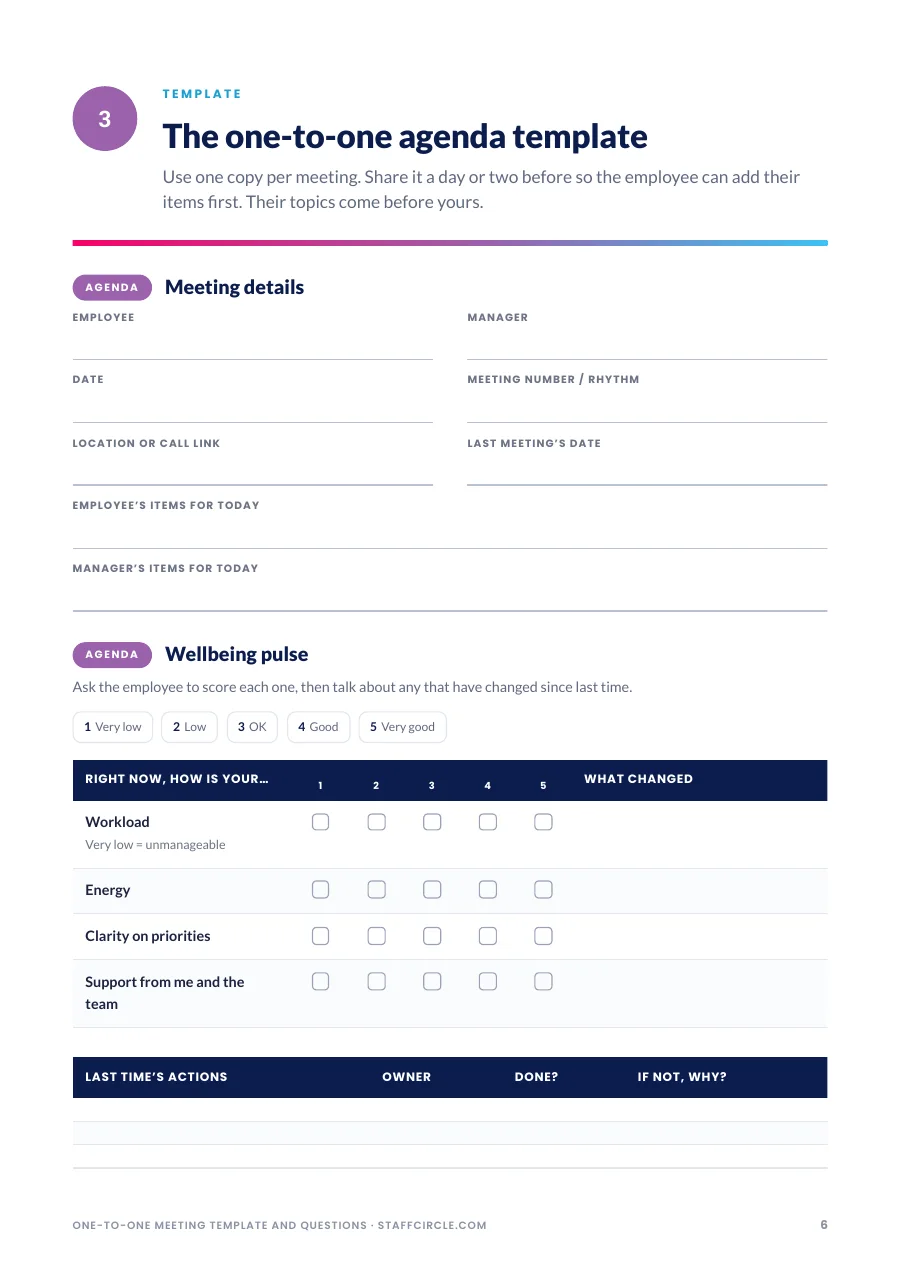
- A one-page agenda template with a wellbeing pulse, actions and sign-off
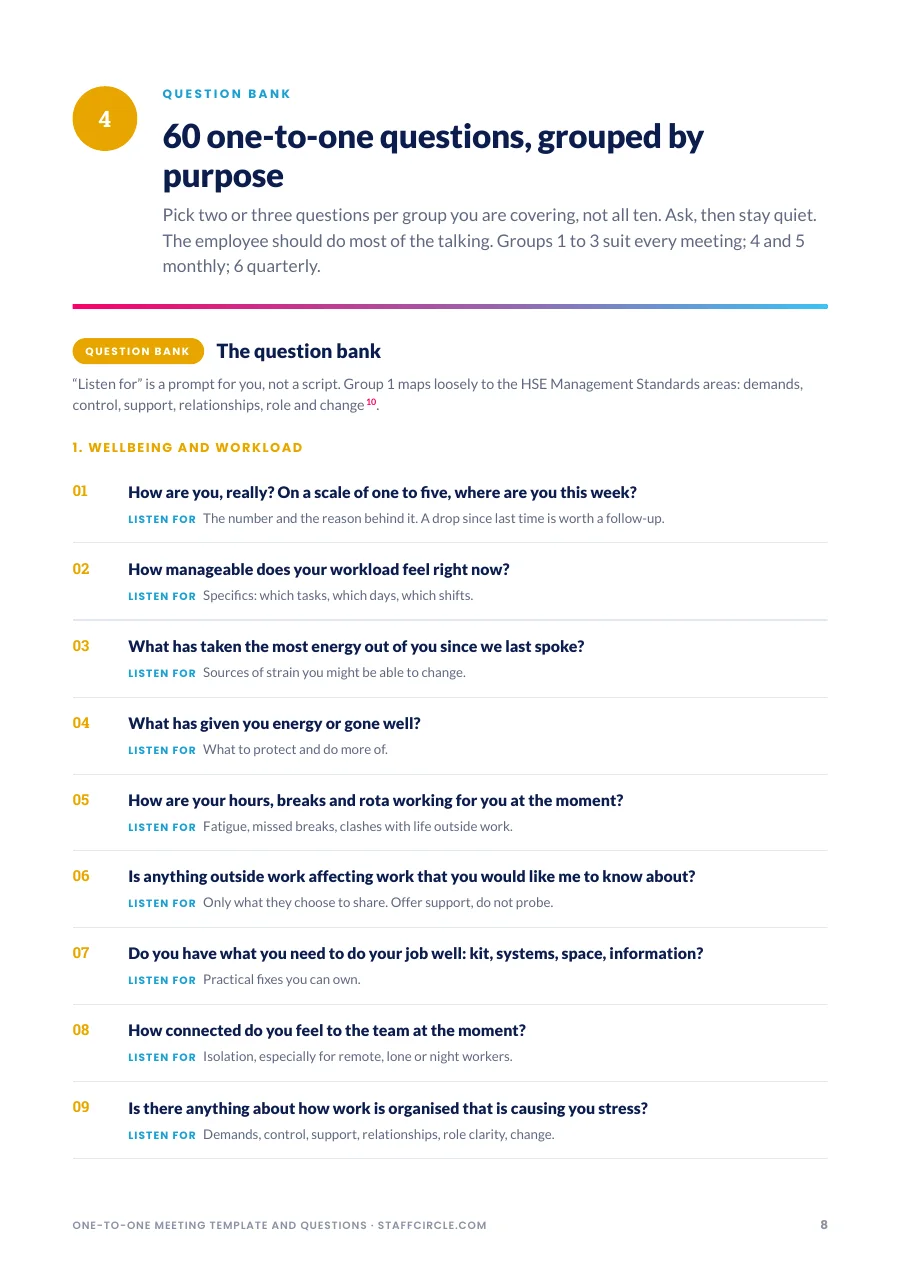
- 60 one-to-one questions in six groups, each with what to listen for
- A cadence guide for new starters, shift workers and remote staff
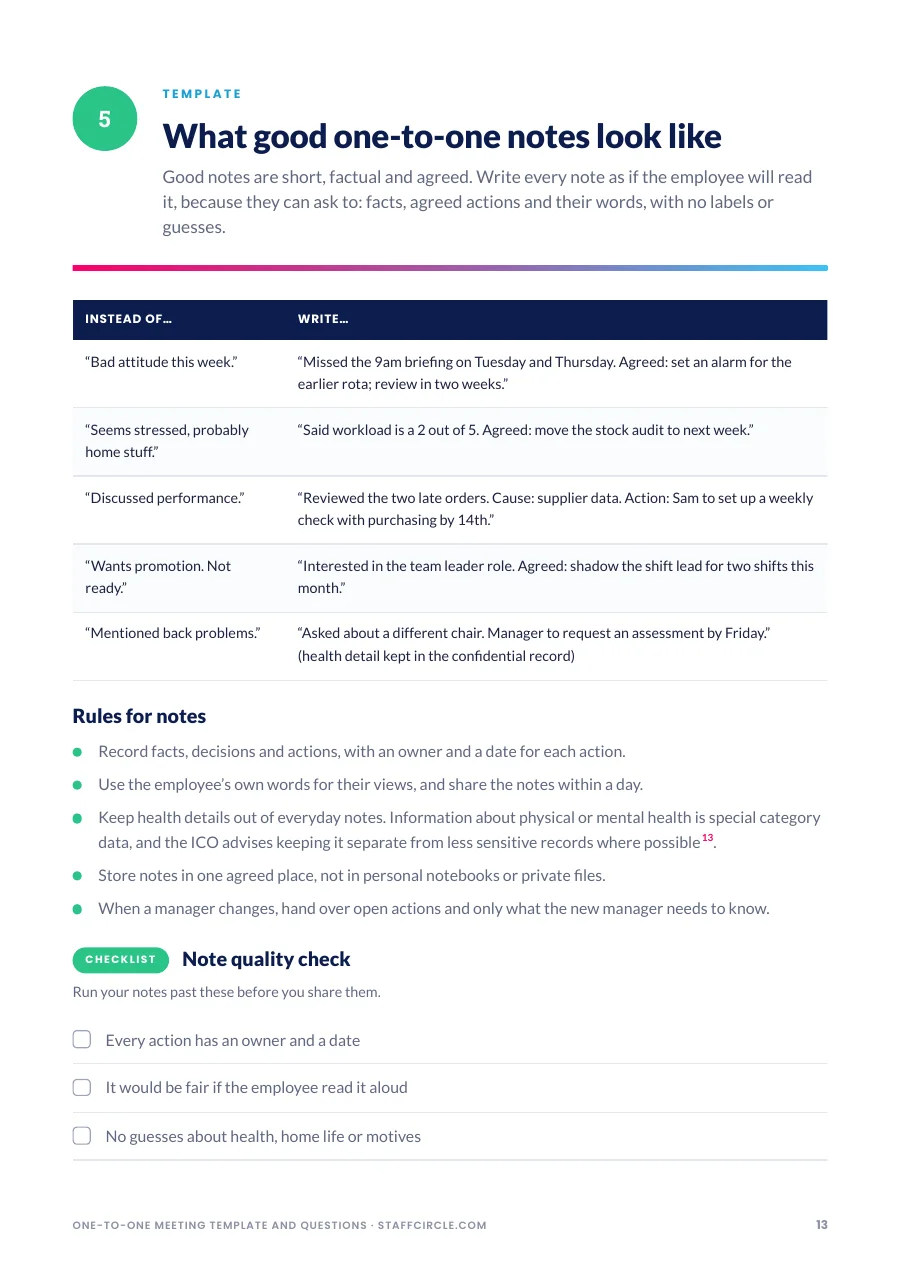
- What good notes look like, with before-and-after examples
- The UK rules: records, subject access and when a chat becomes formal
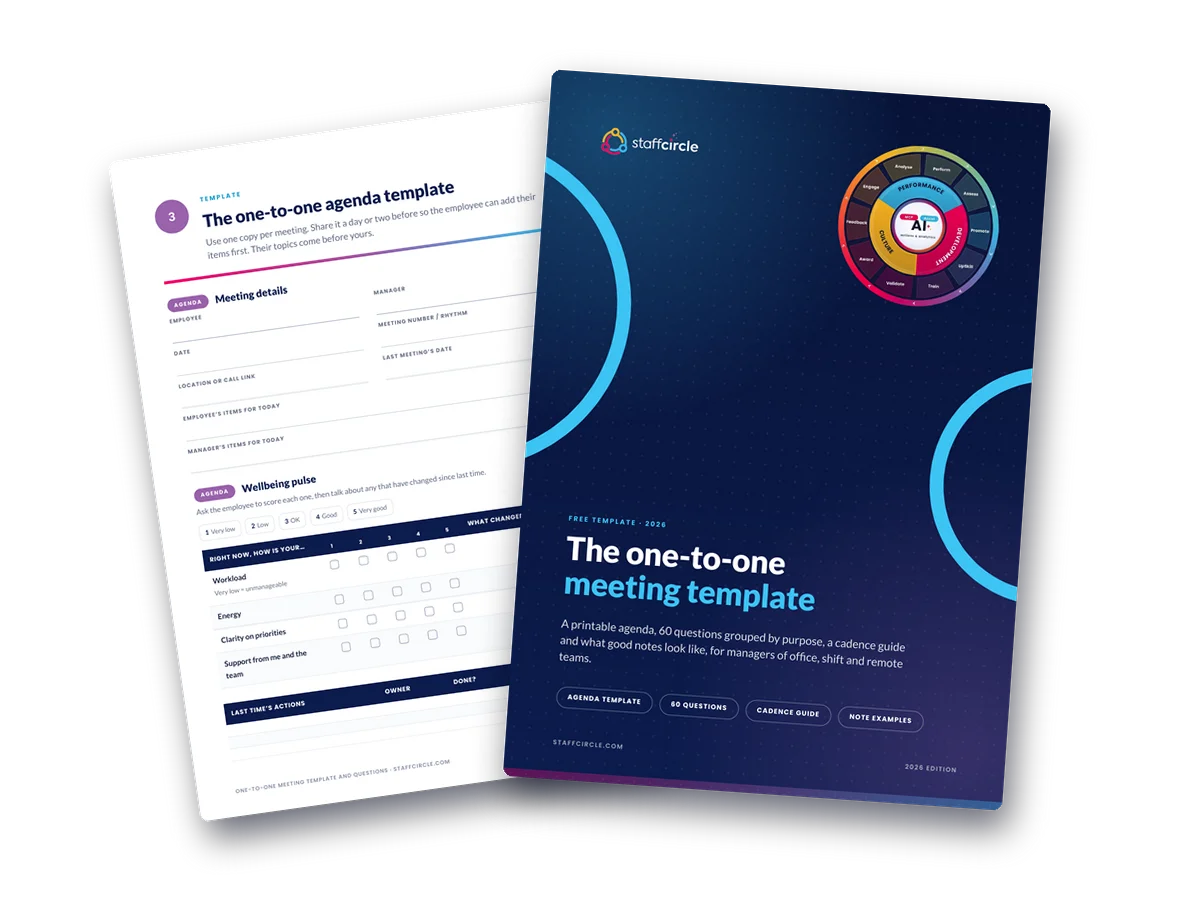
Get your free template
Fill in your details to get the PDF and the editable Word version. We’ll email you the PDF too.
We’ll only use your details to send the template and relevant StaffCircle content. See our privacy policy.
Trusted by teams at leading organisations


A conversation not everyone gets
Six sections, ready to print or edit
What a one-to-one is for
The purpose, what it is not, and five UK rules on records, data and wellbeing.
A cadence guide
How often and how long, which questions when, and one-to-ones on shift or on video.
The agenda template
Meeting details, a wellbeing pulse, last actions, notes, new actions and sign-off.
60 questions by purpose
Wellbeing, priorities, blockers, development, feedback and career, ten of each.
What good notes look like
Poor and good notes side by side, a quality check and a running action log.
When it becomes something else
Stress, health disclosures, and when to stop and move to a formal process.
One-to-ones that people actually find useful
A one-to-one is the employee’s meeting as much as yours. If you do most of the talking, it is a briefing.
Search for a one to one meeting template and you will find much the same thing on most sites: a check-in, a list of priorities, a blockers box and a few career questions. They are a fine start. What they rarely tell you is how often to meet a shift worker, what to write down, or what to do when a routine chat turns into something more serious.
Acas says that, alongside formal performance reviews, managers should still talk to employees informally about their performance on a regular basis, for example through feedback, coaching and “regular check-ins, sometimes known as one-to-ones” (Acas). Yet in the CIPD Good Work Index 2025, 66% of employees named one-to-one meetings with their line manager as a way to have a say at work (CIPD), which leaves a sizeable minority who do not see them that way.
Group questions by purpose, not by meeting type
Most question banks are sorted by scenario: weekly, onboarding, skip-level. It is more useful to sort them by what you are trying to find out. This template has 60 questions in six groups: wellbeing and workload, priorities and progress, blockers and support, learning and development, feedback both ways, and career. Use the first three every time, the next two monthly and career quarterly.
Write notes you would be happy for them to read
One-to-one notes are personal data. An employee can ask for a copy through a subject access request, and you must respond within one month (ICO). For performance reviews, Acas says a written record of what is discussed should be shared with the employee afterwards, and the same habit works well for one-to-ones (Acas). So write facts, actions and their words, not labels or guesses.
- Facts, not adjectives. “Missed two briefings”, not “bad attitude”.
- Every action has an owner and a date. Carry open actions forward until they close.
- Keep health details separate. They are special category data.
- Share within a day. Agreed notes avoid arguments later.
Five steps to one-to-ones that stick
- Agree the purpose, rhythm and note-taking in the first meeting
- Share the agenda in advance and let the employee add items first
- Open with wellbeing, then priorities and blockers
- Close with actions, owners and dates, and share the notes
- Protect the slot, including for night, weekend and remote workers
The download includes the agenda template, the question bank, a cadence guide, before-and-after note examples and a running action log, as a printable PDF and an editable Word file. For more ideas, read our guide to asking the right check-in questions, the signs your one-to-ones are hurting engagement, or see how StaffCircle supports frontline workforces.
One-to-one meetings: common questions
What should a one to one meeting template include?
A space for the employee’s items, a short wellbeing check, a review of last time’s actions, notes on priorities and blockers, any feedback or development discussion, and new actions with owners and dates. This template includes all of these on one printable agenda.
How often should you have one-to-one meetings?
No UK law sets a frequency, and Acas, CIPD and HSE guidance does not give a number. As a starting point, we suggest weekly for new starters, fortnightly for most established staff, and every two to four weeks for experienced people or shift workers with a shorter on-shift slot. Agree the rhythm with each person and keep to it.
How long should a one-to-one meeting be?
We suggest around 30 minutes for most office or hybrid staff, and 10 to 15 minutes on shift for frontline workers. Allow longer, around 45 minutes, when you are covering development or career.
Should one-to-one notes be shared with the employee?
Yes, as good practice. For performance reviews, Acas says it is important to keep a written record of what is discussed and that this should be shared with the employee afterwards. Applying the same habit to one-to-ones, and sharing notes within a day, lets the employee correct anything and confirms what was agreed.
Can an employee ask to see their one-to-one notes?
Yes. Notes about an employee are their personal information, and they can ask for a copy through a subject access request. The ICO says you must respond without undue delay and within one month, and in most cases you cannot charge a fee.
Can an employee bring someone to a one-to-one?
The statutory right to be accompanied applies to disciplinary and grievance hearings, not routine one-to-ones. Acas says informal discussions do not attract the right. If a one-to-one becomes serious, adjourn it and move to your formal procedure, where the right does apply.
What is the difference between a one-to-one and an appraisal?
A one-to-one is a short, regular, informal conversation about current work, wellbeing and support. An appraisal or performance review is a more formal look back over a longer period. Regular one-to-ones mean nothing in the appraisal should come as a surprise.
How do you run one-to-ones with shift or frontline workers?
Book short slots into the rota, often 10 to 15 minutes at the start of a shift, meet somewhere private on site, record three lines and one action on a phone, and give night and weekend workers the same rhythm as day staff.
Can I edit the template?
Yes. The download includes a printable PDF and an editable Word version, so you can add your own questions, sections and logo.
Run better one-to-ones from next week
A printable agenda, 60 questions, a cadence guide and note examples, as PDF and Word.