Employee Retention in 2026: Your Ultimate Guide
Hiring has slowed, but your best people are still leaving. This guide shows you how to keep them, with the latest UK research, a playbook for every stage of the employee lifecycle and a free 30-question survey template.
- How employee experience drives retention, with 2026 data
- What turnover really costs, and where the money goes
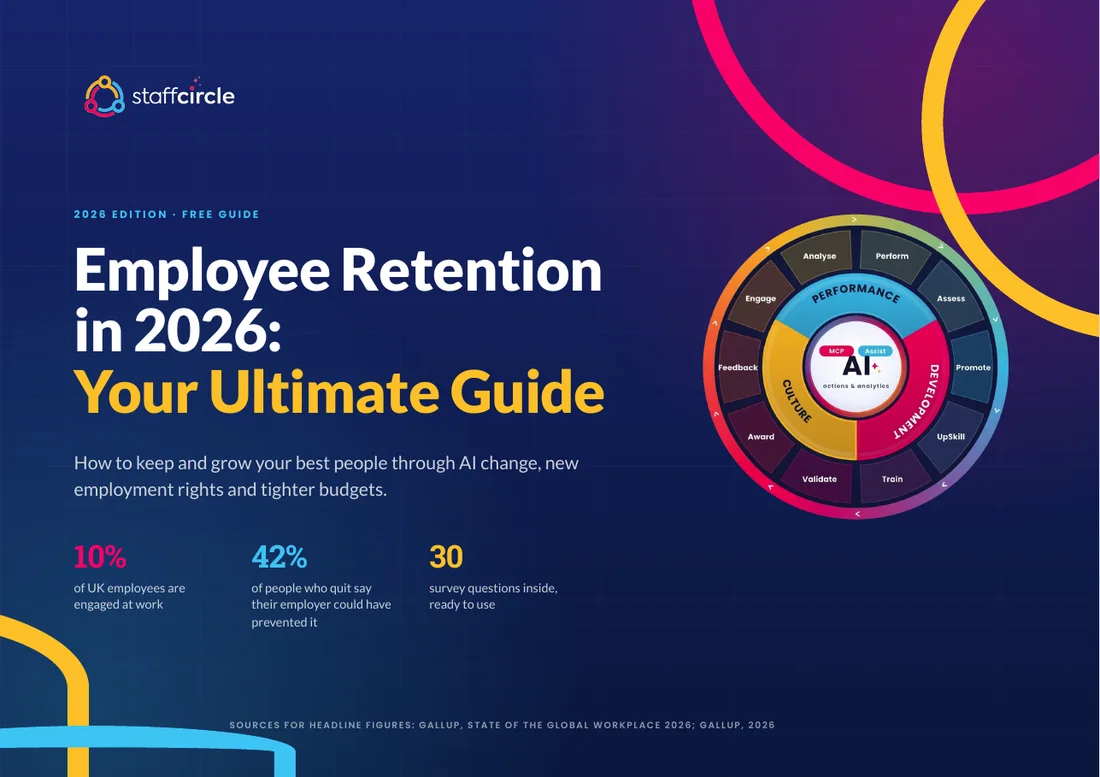
- A practical playbook for all eight lifecycle stages
- New: AI, managers and the Employment Rights Act 2025
- Your free employee experience survey template
Get your free guide
Fill in your details to get your free copy of the PDF.
We’ll only use your details to send the guide and relevant StaffCircle content. See our privacy policy.
Trusted by teams at leading organisations


The problem has changed. The fix hasn’t.
Five sections, one practical playbook
How employee experience affects retention
What has changed in 2026, why people leave now, and what turnover really costs.
Build it into your whole HR strategy
Workforce planning, recruitment, onboarding, performance, L&D, succession, pay and skills.
New: AI, managers and new employment rights
Where AI really helps managers, and the Employment Rights Act 2025 timeline.
Proven, actionable methods
Success stories from HR experts on hiring, culture and reducing turnover.
Your 30-question survey template
Six categories to baseline your employee experience and track progress.
Why employee retention matters more in 2026
Business growth is impossible if your best people keep leaving, and in 2026 they are harder to keep than the jobs market suggests.
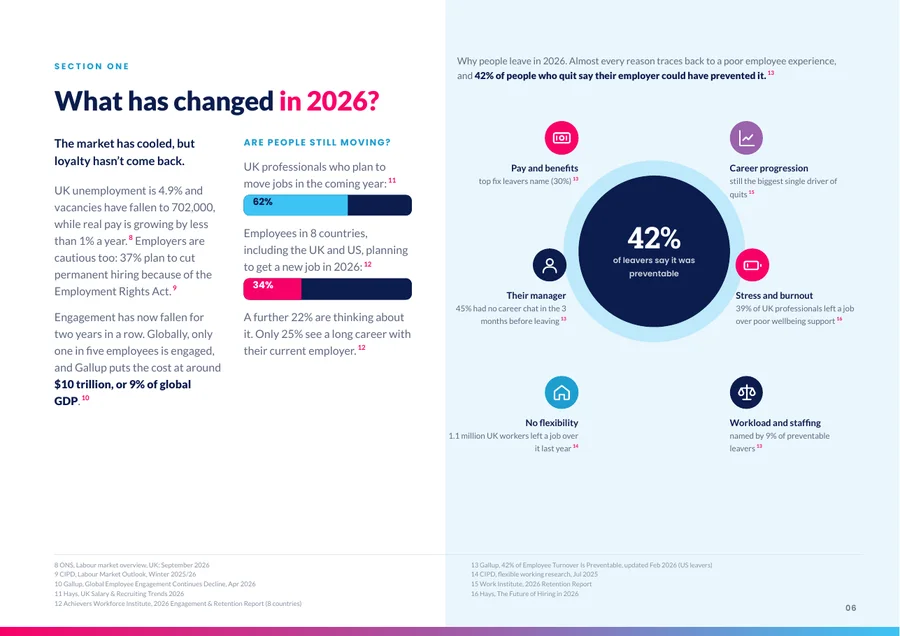
The UK labour market has cooled. Unemployment is 4.9% and vacancies have fallen to 702,000 (ONS, September 2026). You might expect people to stay put. Instead, 44% of UK organisations say talent is harder to retain (CIPD, 2026) and 62% of UK professionals plan to move jobs in the coming year (Hays, 2026).
Engagement is the reason. Only 10% of UK employees are engaged at work (Gallup, 2026), and replacing someone costs from 40% of salary for a frontline role to 200% for a manager (Gallup).
What has changed for UK employers
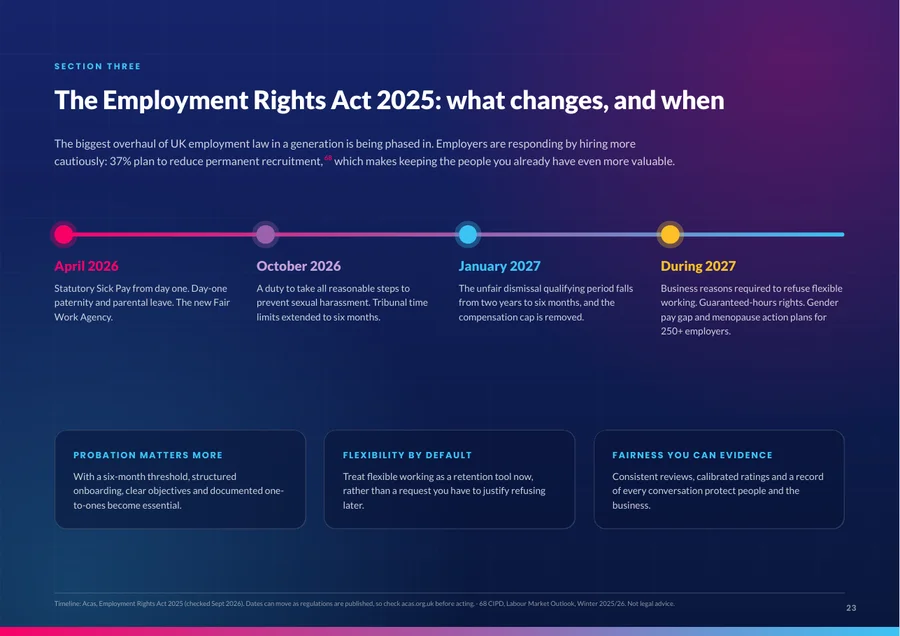
- The Employment Rights Act 2025. Day-one sick pay and family leave rights from April 2026, and a six-month unfair dismissal qualifying period from January 2027 (Acas).
- AI anxiety. Concern about losing a job to AI has risen from 28% to 40% of employees in two years (Mercer, 2026).
- Stretched managers. Only 22% of managers worldwide are engaged, down from 31% in 2022, yet managers account for 70% of the variance in team engagement (Gallup).
- Flexibility as a deal-breaker. 1.1 million UK workers left a job last year because it wasn’t flexible enough (CIPD, 2025).
Five steps to start this quarter
- Run an employee experience survey to set a baseline
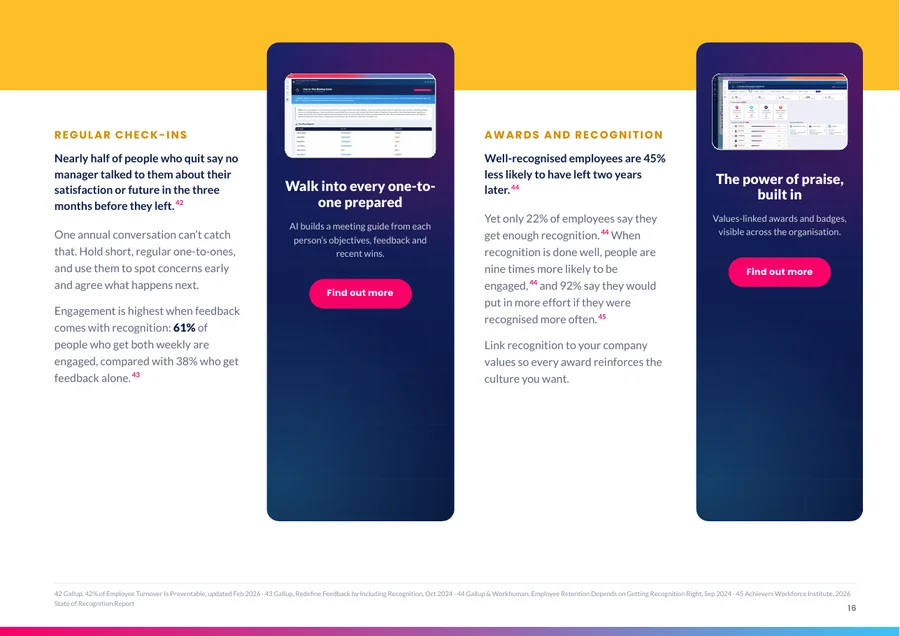
- Put a regular one-to-one in every manager’s diary
- Agree a development plan with every employee
- Recognise good work, linked to your company values
- Map your skills and plan succession for critical roles
The full guide covers each step in detail, with a playbook for every stage of the employee lifecycle. Download it free.
Employee retention in 2026: common questions
What is a good employee retention rate in 2026?
There is no single benchmark, because turnover varies by sector and role. Most organisations aim to keep voluntary turnover in single figures for professional roles and to track early leavers (those who go within 90 days) separately. The more useful measure is preventable turnover: Gallup finds 42% of people who quit say their employer could have kept them.
What are the main reasons employees leave in 2026?
The most common reasons are pay and benefits, the relationship with their manager, a lack of career progression, too little flexibility, and stress or poor wellbeing support. In the UK, 1.1 million people left a job in the past year because it was not flexible enough (CIPD, 2025).
How does the Employment Rights Act 2025 affect employee retention?
It is phased in from April 2026. Day-one sick pay and family leave rights arrive first, and from January 2027 the qualifying period for unfair dismissal falls from two years to six months. That makes structured onboarding, well-run probation reviews and documented one-to-ones far more important. Check acas.org.uk for the latest dates.
What is the most effective way to improve employee retention?
Start with managers. Managers account for 70% of the variance in team engagement (Gallup), so regular, meaningful one-to-ones, recognition linked to your values, and a clear development plan for every person have the biggest effect. Measure where you stand first with an employee experience survey, like the 30-question template in this guide.
What does the 2026 retention guide include?
The 32-page guide covers how employee experience drives retention, what has changed in 2026, the true cost of turnover, a playbook for each of the eight stages of the employee lifecycle, a new section on AI, managers and the Employment Rights Act, success stories from HR experts, and a free 30-question survey template.
Keep your best people in 2026
Research, a stage-by-stage playbook and a ready-to-use survey template.