10 Best 360 Feedback Software for UK Businesses: Compare Features, Pricing, Reporting & Use Cases
Choosing 360 feedback software gets messy fast. Almost every tool promises the same thing. Better feedback, easier reviews, stronger development. But once you start comparing them properly, the differences are bigger than the landing pages let on.
Some tools are built for a standalone 360 assessment, run once or twice a year, with nothing else attached. Others are built to keep that feedback connected to objectives, performance reviews, one-to-ones, and development plans year-round.
Picking the wrong type means paying for an assessment tool and still tracking performance by hand, or paying for a full platform and never touching most of it.
That's why we put this list together.
We looked at the 360 feedback workflow itself, how anonymity holds up, how much admin it takes to run a review cycle, what the reports give you, and what happens to the feedback after it's collected. So if you're trying to work out which platform actually fits your team, here are the best 360 feedback software tools for 2026.
Why Listen to Us?
At StaffCircle, we build performance management software around feedback, reviews, objectives, one-to-ones, and employee development. We’ve seen how 360 feedback works in real organisations.
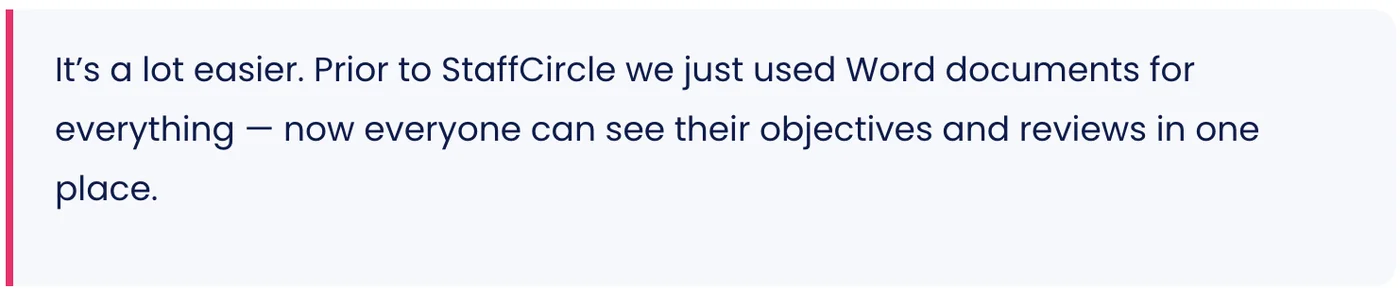
UK Government Investments (UKGI) uses StaffCircle’s 360 review tool to collect feedback from line managers, direct reports, and people across different departments, replacing a process that previously relied on Word documents and emails.
That experience gives us a practical view of what organisations actually need from 360 feedback software, which we used to assess the tools below.
10 Best 360 Feedback Software at a Glance
| Software | Best For | 360 Feedback Type | Key Features |
|---|---|---|---|
| StaffCircle | Combining ongoing 360 feedback with formal performance reviews | Continuous + structured | Layered 360 feedback throughout the year, customisable 360 appraisals, feedback carried into performance reviews and employee development |
| Culture Amp | Developmental 360 programmes with guided coaching | Structured | Coached and coachless 360 workflows, organisation-wide development insights |
| Lattice | Calibrating performance decisions across teams | Structured | Calibration groups, pre- and post-calibration ratings |
| Leapsome | Turning review findings into targeted employee learning | Structured | Competency-linked learning paths, personalised learning recommendations |
| 15Five | Measuring and improving manager effectiveness | Structured | Manager Effectiveness Assessment, Manager Effectiveness Indicator |
| Spidergap | Running specialist 360 assessments without a wider HR suite | Structured | Current-vs-desired performance scoring, development-focused feedback reports |
| PerformYard | Building highly customised multi-stage review workflows | Structured | Flexible reviewer nominations, configurable review and approval stages |
| Factorial | Assessing role-specific competencies inside an HRIS | Structured | 180°, 270° and 360° competency assessments, role-based competency frameworks |
| Qualtrics | Managing complex enterprise 360 programmes at scale | Structured | Participant portal, configurable nomination and approval workflows |
| Teamflect | Automating 360 feedback inside Microsoft Teams | Structured + recurring | Native Teams workflows, milestone- and schedule-based feedback cycles |
1. StaffCircle
Best for: Combining ongoing 360 feedback with formal performance reviews
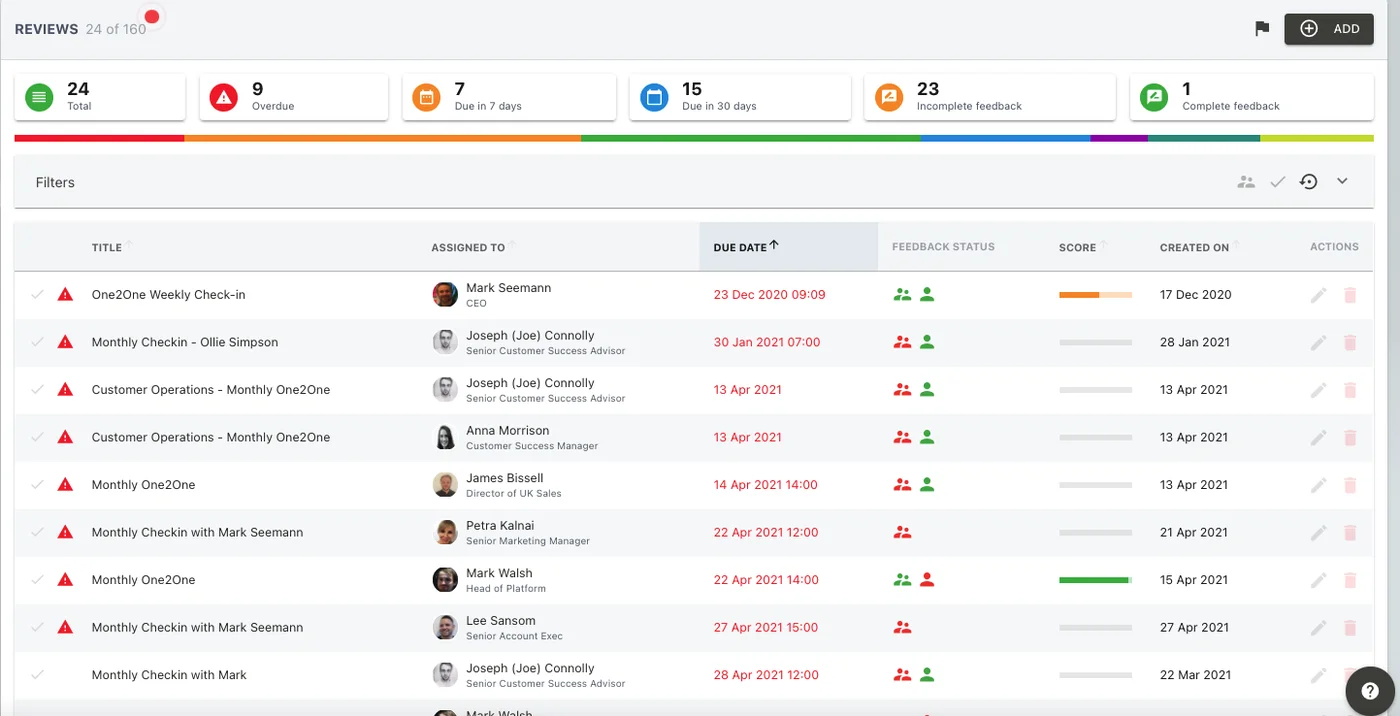
If you want 360 feedback to be something employees use throughout the year, rather than a process HR opens once or twice annually, StaffCircle is one of the stronger options.
The platform supports both continuous feedback and structured 360 appraisals, so you can run formal review cycles without losing the day-to-day context that builds up between them.
Feedback can sit alongside objectives, competencies, one-to-ones, development plans, and previous reviews, giving managers a fuller picture when it is time to evaluate performance.
That matters because a 360 process is only as useful as what happens after the feedback is collected. StaffCircle connects feedback with broader performance and development data, so it can inform personal objectives, competency discussions, skills development, career pathways, and succession planning rather than ending as a standalone report.
It also gives HR more control over the process itself. Reviews and objectives can be standardised across teams, employees can contribute feedback from different working relationships, and managers can use live performance data instead of piecing together notes from emails, spreadsheets, and old documents.
StaffCircle says customers spend up to 90% less time on performance admin, while 96% of reviews are completed on time.
If you are building that process from scratch, see our 10-step guide to implementing 360-degree feedback for the practical setup behind the software.
Key Features
- Continuous + structured 360 feedback: Collect feedback throughout the year while still running formal appraisal cycles.
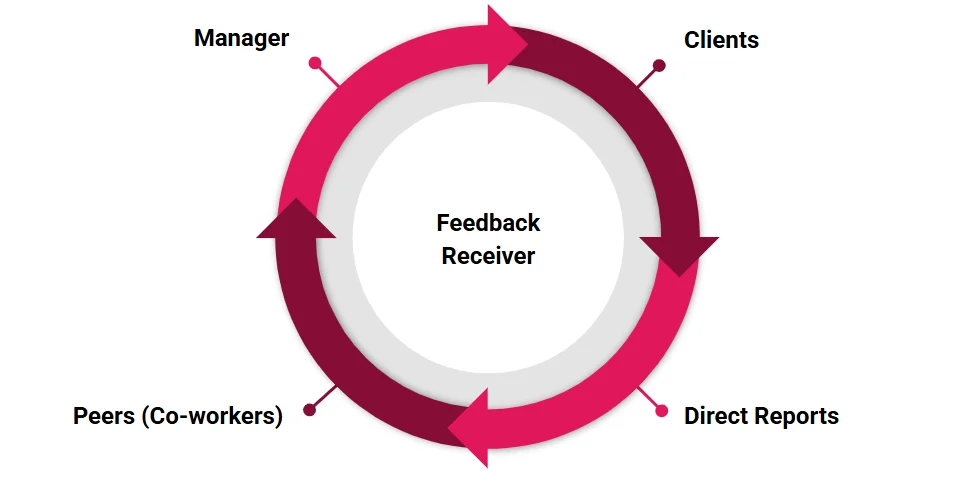
- 360 appraisals: Bring together feedback from managers, peers, direct reports, and other relevant colleagues.
- Performance history: Keep feedback alongside objectives, one-to-ones, competencies, and previous reviews.
- Development planning: Turn review findings into personal development objectives and clearer next steps.
- Competency alignment: Connect feedback with role-based competencies, skills gaps, and development priorities.
- Succession planning: Use performance and competency data to identify readiness gaps and future leadership potential.
- AI-powered insights: Generate competency frameworks and surface performance, skills, and succession insights from live employee data.
- Dashboards and reporting: Give HR and managers a clearer view of review completion, objectives, performance, and development.
Value Props
- Keeps 360 feedback active between formal review cycles
- Gives managers more evidence before performance conversations
- Connects feedback directly with development and succession
- Reduces the admin around recurring review processes
- Keeps performance, skills, objectives, and feedback in one system
- Works across desk-based, hybrid, multi-site, and frontline teams
Why We Picked This
StaffCircle stands out because it does not force you to choose between continuous feedback and formal 360 reviews.
You can run structured appraisal cycles when you need a formal assessment, while still collecting feedback throughout the year. That gives employees a running record of their performance, rather than making the annual review the first time they hear what's going well or where they need to improve.
The bigger advantage is that the feedback feeds into the rest of the performance process. Objectives, competencies, skills development, reviews, and succession planning all sit around the same employee record, so the 360 process can lead directly into the next action.
That makes StaffCircle a stronger fit for organisations that want 360 feedback to influence ongoing performance and development, rather than simply generate another report.
What Customers Are Saying
Aspectus uses StaffCircle to keep feedback active throughout the year instead of saving everything for the annual review.
Its team records 360 feedback as work happens, giving employees and managers a history they can refer back to later. People and Experience Director Tamsin Jackson described the benefit simply: by review time, “all the feedback is in there, and nothing should come as a surprise.”
That is a good example of where StaffCircle's continuous model is most useful. The review meeting becomes a discussion built on months of existing evidence rather than a one-off attempt to remember an entire year.
Pricing
StaffCircle starts at £3.85 per employee per month, billed annually, with volume discounts as headcount increases. Performance Management is the core module, with additional development, engagement, HR, and analytics modules available as needed.
2. Culture Amp
Best for: Developmental 360 programmes with guided coaching
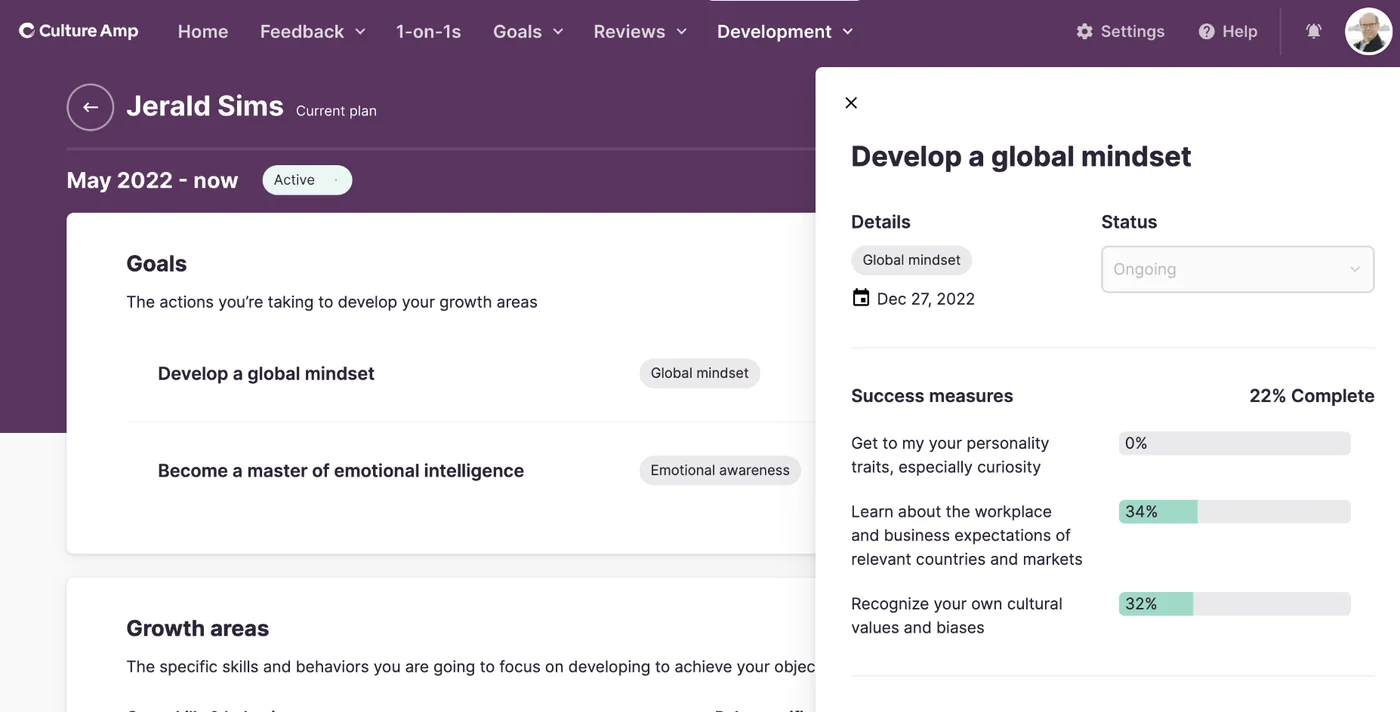
Culture Amp is a strong fit if you want to use 360 feedback mainly for employee development rather than formal performance scoring.
Its Individual Effectiveness 360 can be employee-led or centrally managed by HR, with a coach assigned to help participants interpret their results and decide what to work on next. That gives the process more structure than simply sending someone a feedback report and expecting them to figure it out alone.
Culture Amp also gives L&D teams aggregated insight across multiple 360s, which can help identify common strengths and development areas across a wider group.
Key Features
- Guided coaching: Assign a coach to help participants interpret their results and decide which development areas to focus on next
- Employee-led or admin-led 360s: Run the process centrally through HR or let eligible employees launch their own 360 feedback cycle
- Multiple 360 formats: Includes Individual 360, Leadership 360, Manager 360, and the lighter Feedback 360 Pulse option
- Strength and improvement mapping: Structured reports highlight where employees are performing strongly and where they should focus their development
- Feedback 360 Pulse: Uses four qualitative questions for faster feedback after projects, onboarding, or other development moments where a full 360 would be excessive
Why We Picked This
Culture Amp earns its place for organisations that want 360 feedback to build self-awareness and development, especially where coaching is already part of the L&D strategy.
Pricing
Custom pricing based on company size and the Culture Amp products included.
3. Lattice
Best for: Calibrating performance decisions across teams
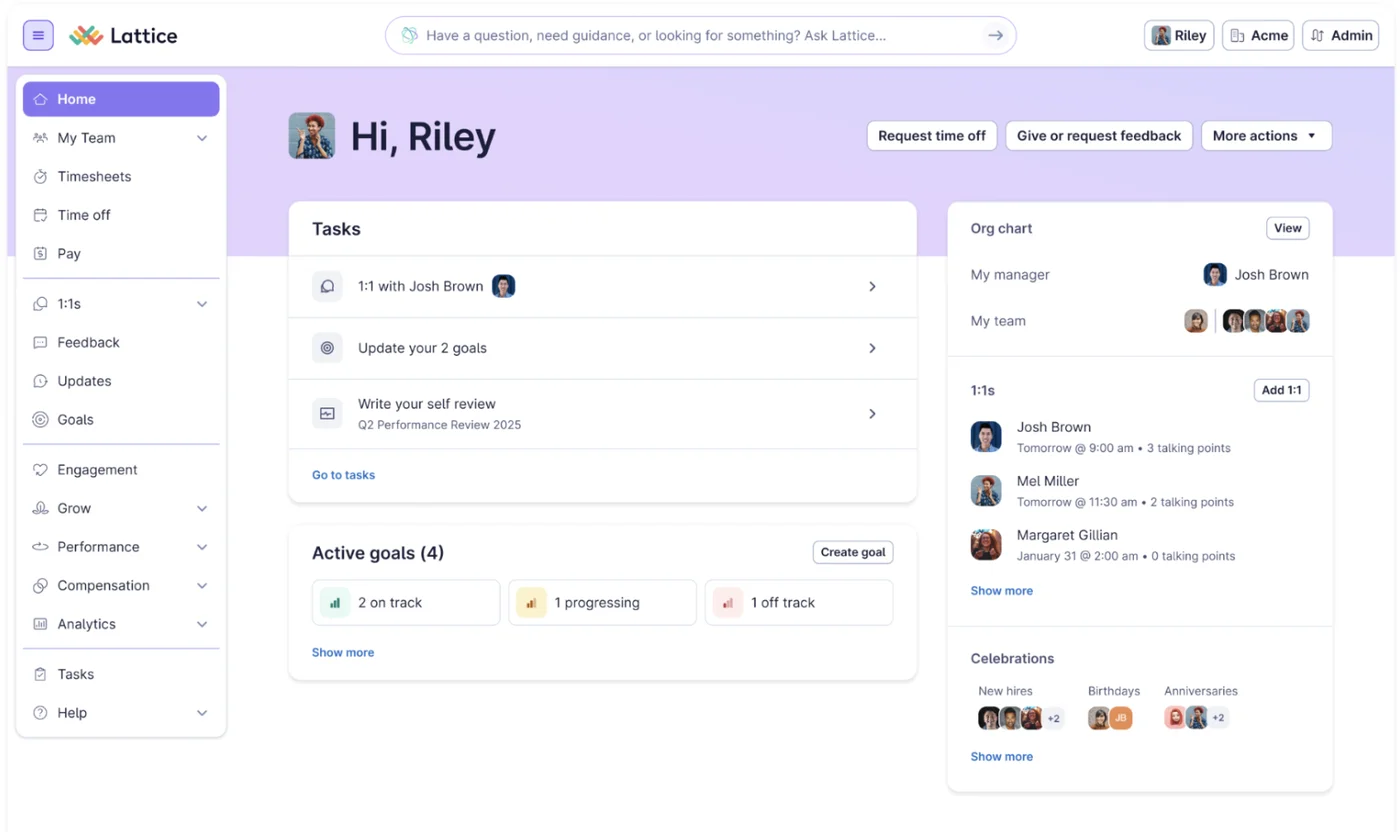
Lattice is a performance management platform built around reviews, goals, feedback, and employee development.
Its 360 review workflows can bring together self, manager, peer, and upward feedback, but its distinctive part is the calibration layer. HR teams can group employees for calibration, compare pre-calibration ratings, and adjust scores against a shared standard before making final decisions.
Managers can also pull in goals, feedback, 1:1s, competencies, growth areas, and previous reviews while writing evaluations, which gives the calibration process more context than a single score.
Key Features
- Calibration groups: Compare and standardize performance ratings across selected employee groups.
- Pre- and post-calibration scores: See how ratings change during the calibration process.
- Review context panel: Bring goals, feedback, competencies, 1:1s, and past reviews into the evaluation workflow.
- Flexible review cycles: Run annual, quarterly, project-based, or automated performance reviews.
- AI review drafts: Generate review drafts using existing employee performance data. Calibration exports: Export ratings and review data for further analysis.
Value Props
- Reduces rating inconsistencies across managers
- Keeps 360 feedback connected to formal performance decisions
- Gives calibration discussions more supporting context
- Replaces spreadsheet-heavy calibration processes
Why We Picked This
Lattice earns its place for the depth of its performance calibration workflow. Rather than stopping once multi-rater feedback has been collected, teams can use that review data inside a structured calibration process,
Pricing
Custom pricing based on the products and company requirements.
4. Leapsome
Best for: Turning 360 review findings into targeted employee learning
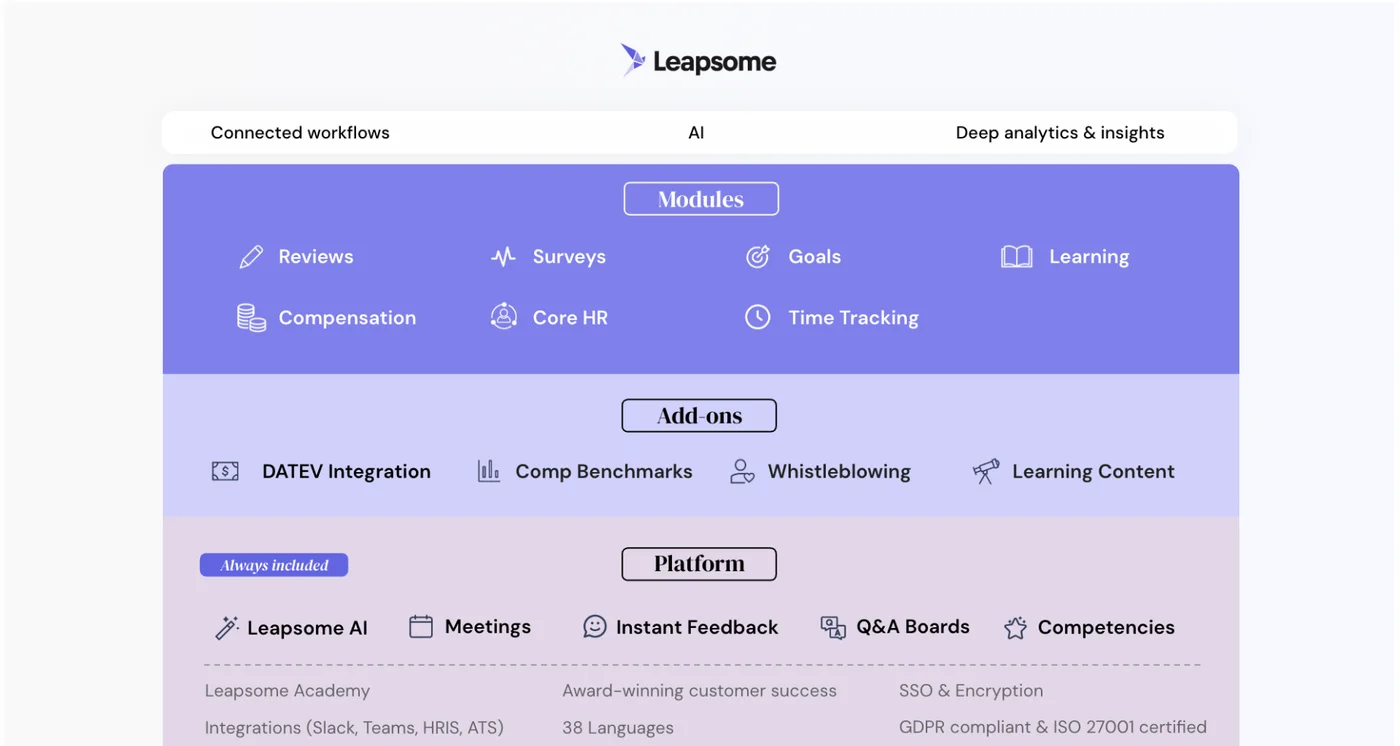
Leapsome runs 360-degree feedback inside its Reviews module, built on a structured competency framework, and closes the loop by linking learning paths directly to the competencies employees are rated on.
When a learning path and a development goal share the same competency, Leapsome automatically surfaces that path to the employee in the Goals module, so a skill gap flagged in feedback leads straight to relevant training.
Key Features
- 360 review cycles: Run self, manager, peer, and upward assessments within the same review process
- Competency-linked reviews: Assess employees against company-wide or team-specific competencies by role and seniority
- Personalised learning recommendations: Suggest up to three learning paths when a review is shared, based on feedback and competencies
- Competency-based learning paths: Connect development content directly to the skills employees need to improve
- AI learning-path creation: Generate complete learning paths, including content and quizzes, from company material and development needs
Value Props
- Gives employees a clear next step after receiving 360 feedback
- Connects identified skill gaps directly with learning content
- Keeps competencies, reviews, goals, and development in the same system
- Reduces the gap between performance feedback and actual upskilling
Why We Picked This
Leapsome earns its place by creating one of the clearest links between 360 feedback and employee learning.
Pricing
Leapsome uses custom pricing based on company size and selected modules.
5. 15Five
Best for: Measuring and improving manager effectiveness, not just running a standard 360
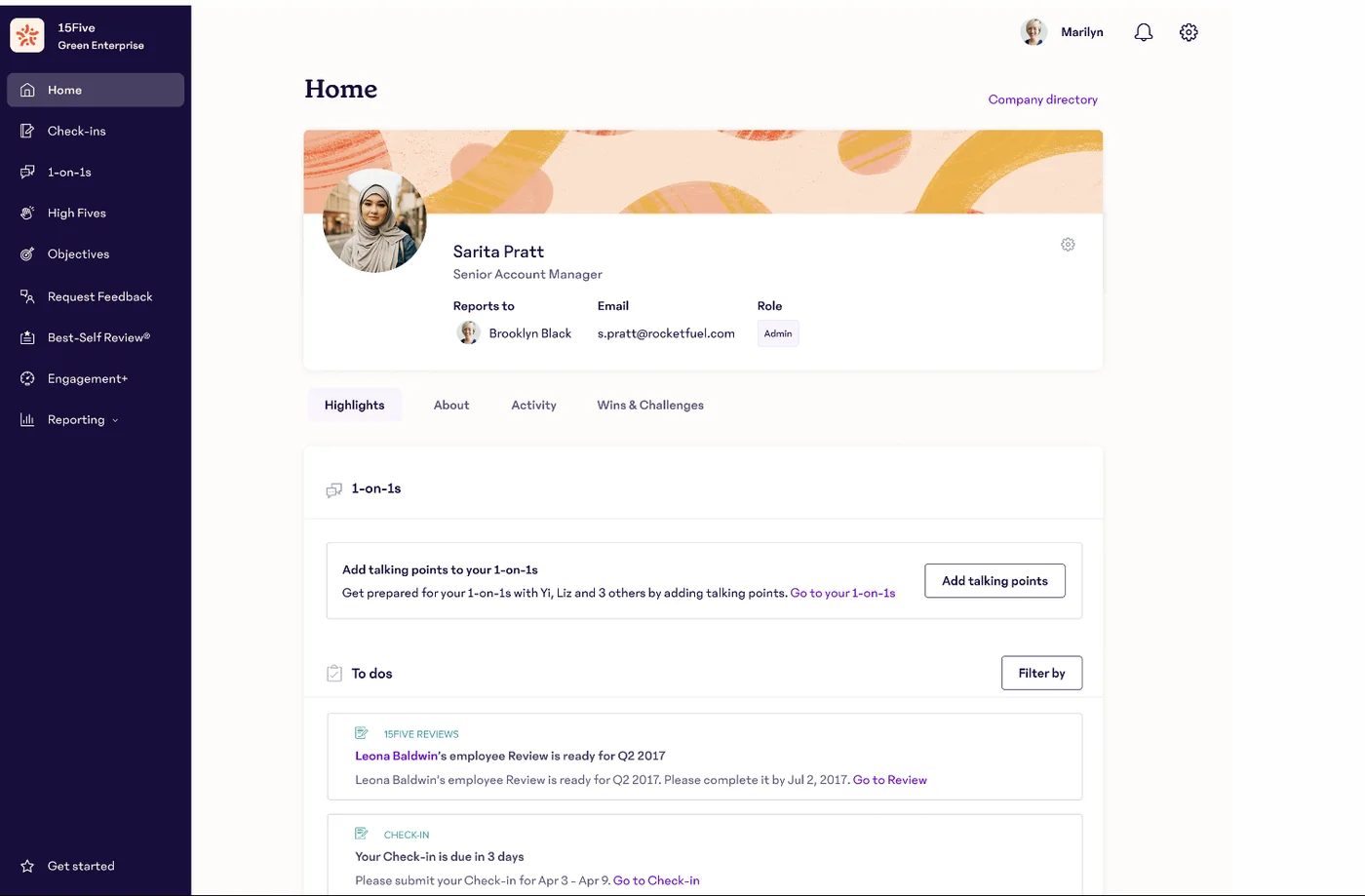
15Five's Best-Self Review runs self, peer, manager, and upward feedback in one cycle, but its distinct feature is the Manager Effectiveness Indicator (MEI). It’s a score built from a manager's engagement scores, turnover rate, 1:1 frequency, and upward feedback across eight named competencies, from setting goals to supporting career growth.
It recalculates automatically after each review cycle or survey, so managers get an ongoing effectiveness score rather than a one-time rating.
Read more: 15Five Alternatives
Key Features
- 360° Best-Self Reviews: Combine self, manager, peer, and upward feedback in one review cycle
- Manager Effectiveness Indicator: Creates a measurable view of manager effectiveness using competencies, behaviors, and platform data
- Manager Effectiveness Assessments: Evaluate the skills and behaviors managers demonstrate and identify perception or capability gaps
- Private Manager Assessment: Uses an alternative rating method designed to reduce rater bias in performance assessment
- AI-assisted reviews: Draft reviews using information from check-ins, 1:1s, and other performance data gathered during the review period
Value Props
- Gives HR a clearer way to quantify manager effectiveness
- Connects 360 feedback with manager coaching and development
- Helps identify which managers need support and where
- Brings manager performance, engagement, and development data together
Why We Picked This
15Five earns its place because it makes manager effectiveness a measurable part of the 360 process.
6. Spidergap
Best for: Running specialist 360 assessments without a wider HR suite
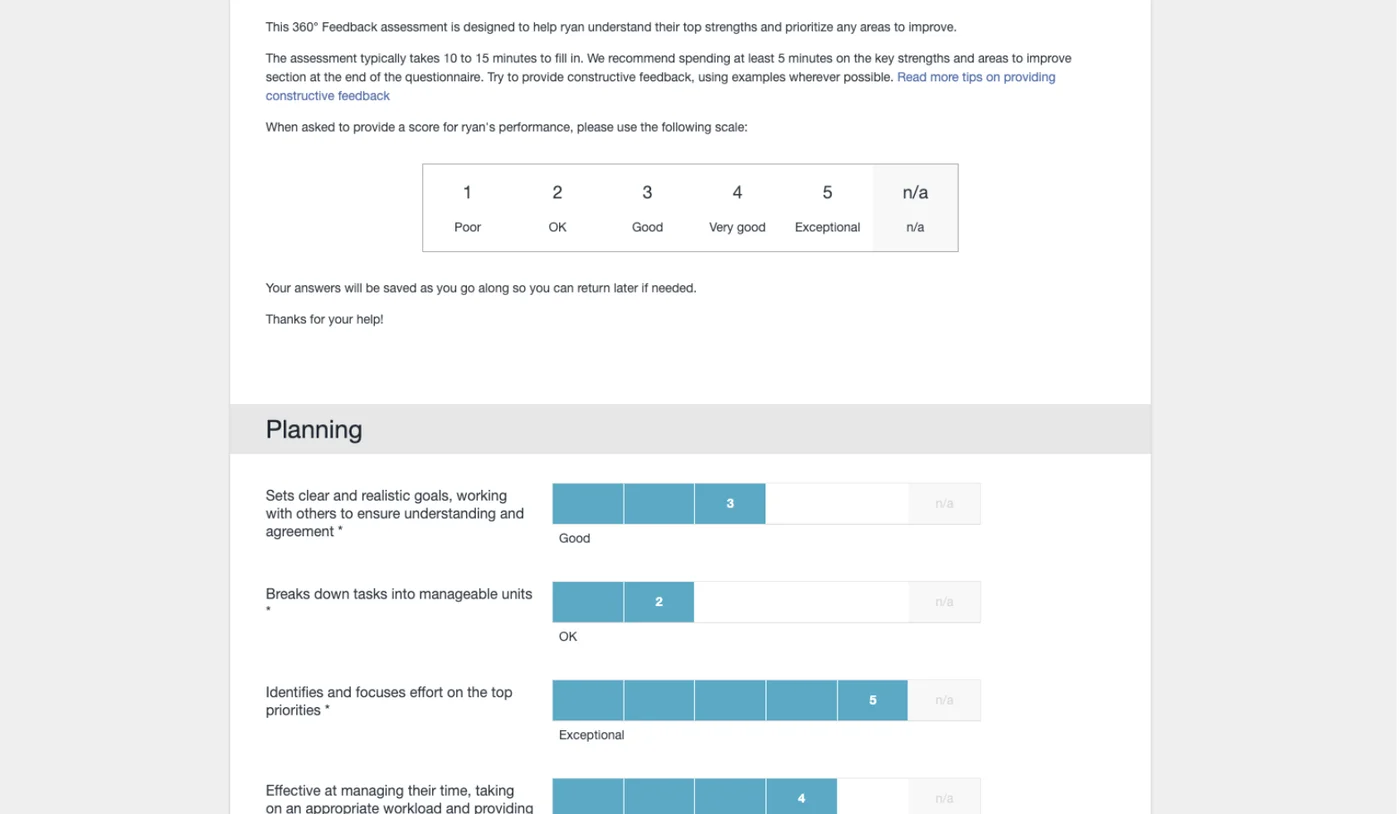
Spidergap is a dedicated 360 feedback platform rather than a broader performance management system. Its entire workflow is built around designing assessments, collecting multi-rater feedback, and producing reports.
Teams can start with Spidergap’s best-practice questionnaire, customise it around their own behaviours and competencies, and tailor reports to show the sections that matter most.
Spidergap also emphasises what happens after the report is generated. Its reports highlight strengths, areas to improve, comparison-of-views data, written comments, and a personal development plan.
Key Features
- Customisable 360 questionnaires: Start with a best-practice template or tailor questions, rating scales, relationship groups, and role-specific content
- Current vs desired performance: Compare how someone is performing now with the level expected for their role or development goals
- Employee-friendly reports: Surface strengths, priority development areas, comments, and comparison-of-views data in a structured report
- Personal development plans: Use feedback results to build a clear action plan rather than stopping at the assessment
- No-login feedback collection: Reviewers can submit feedback through a unique link without creating an account
- Impact surveys: Measure how useful the 360 process was and show the value of the programme to stakeholders
Value Props
- Purpose-built for 360 feedback rather than a wider HR stack
- Easier to deploy for one-off or recurring assessment programmes
- Keeps reporting focused on development rather than generic HR data
Why We Picked This
Spidergap earns its place for organisations that want a dedicated 360 assessment tool and don't need a full performance management platform.
Pricing
Starter begins at £899/year for 10 feedback recipients, while Pro starts at £1,749/year. Additional recipients are charged separately, and Enterprise pricing is custom.
7. PerformYard
Best for: Building highly customised, multi-stage review workflows around a process you already have
PerformYard doesn't ship one fixed 360 process; it lets HR configure who reviews whom, what questions each reviewer type answers, and whether responses are anonymous or attributed, all within a single review cycle.
Peer relationships can be set up by having employees request feedback themselves, offer it to a colleague, or have managers define reviewer pairs directly, so the workflow can match however the organisation already runs reviews rather than forcing a fixed structure onto it.
Key Features
- Flexible reviewer nominations: Let employees, managers, admins, or other colleagues nominate 360 reviewers
- Nomination approvals: Require manager or admin approval before a reviewer is added
- Multi-stage workflows: Build sequences where one review stage feeds into the next
- Anonymous feedback controls: Redact reviewer names and control who can see submitted feedback
- Custom sign-off rules: Add one or more signers before a 360 form is considered complete
Value Props
- Lets HR recreate complex existing review processes digitally
- Gives more control over who participates and who sees each response
- Reduces manual chasing through automated workflow steps
- Works well for organisations with different review structures across teams
Why We Picked This
PerformYard earns its place for workflow flexibility.
Its 360 setup gives HR unusually granular control over nominations, approvals, anonymity, deadlines, stages, and sign-offs.
Pricing
Performance Management starts at $5–$15 per employee per month, billed annually, depending on company size and selected products.
8. Factorial
Best for: Assessing role-specific competencies inside an HRIS
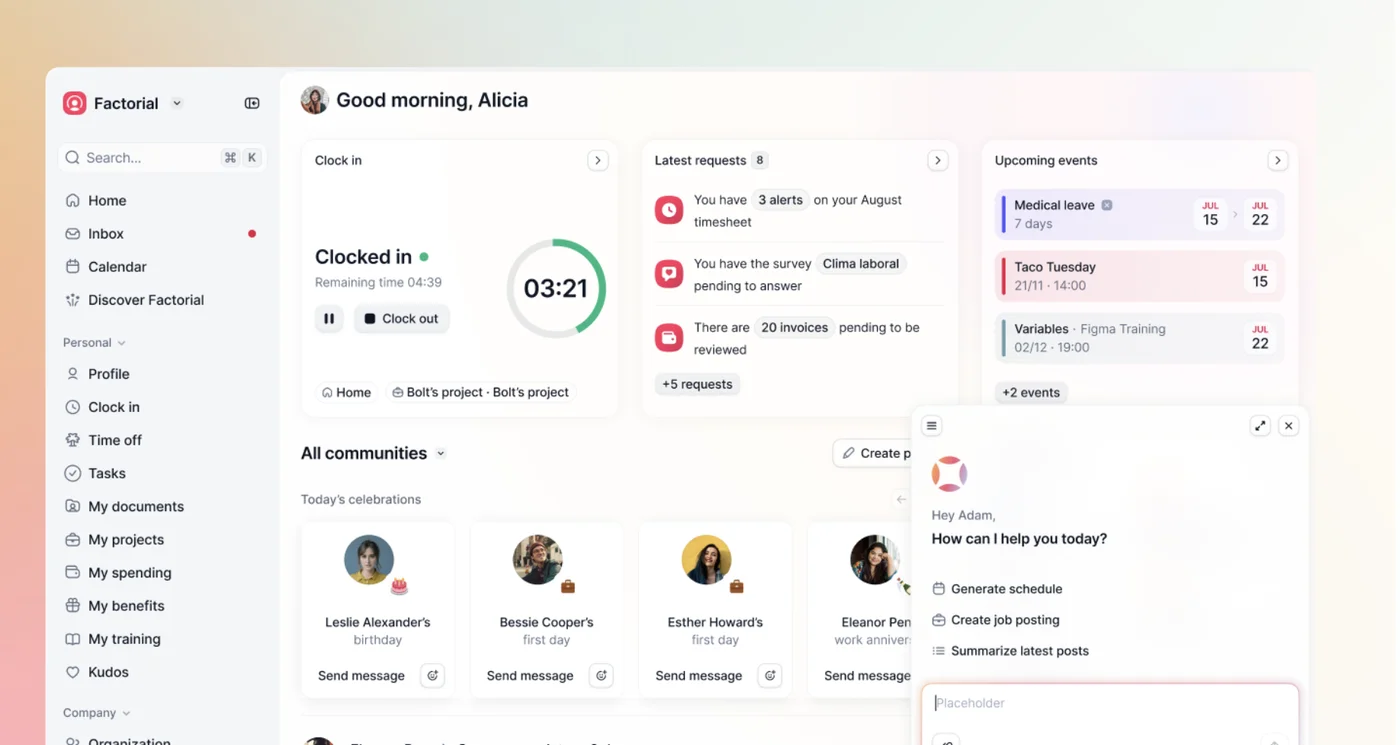
Factorial is an all-in-one HR platform that includes performance reviews, competencies, goals, time tracking, payroll support, and core employee management.
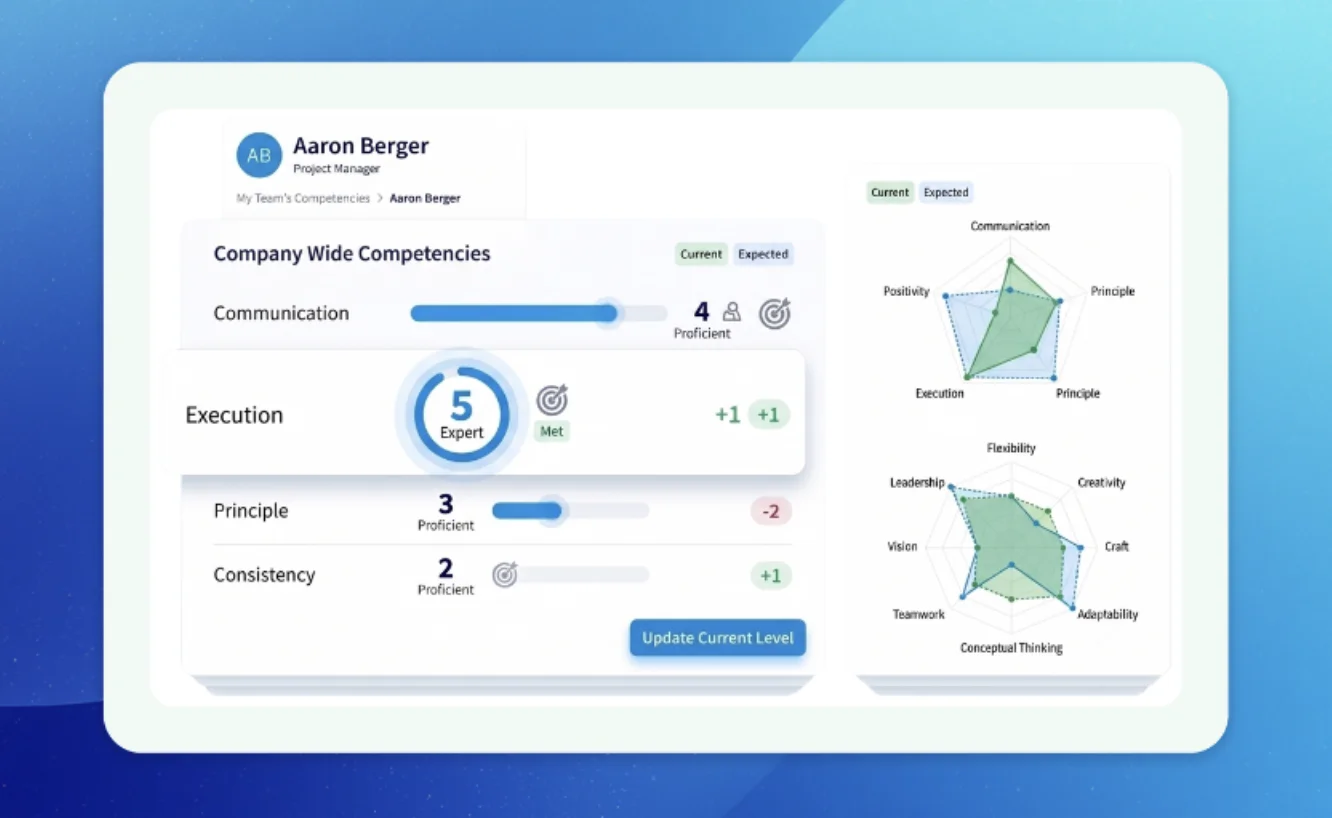
Its 360 review setup supports self, manager, peer, and upward feedback, but its distinctive feature is how those reviews connect to Factorial’s competency framework. HR teams can define competencies by role and seniority, assess them through 180°, 270°, or 360° reviews, and compare results against the expectations already attached to each employee’s position.
Key Features
- 180°, 270°, and 360° reviews: Run different multi-rater review formats depending on how broad the feedback needs to be.
- Role-based competency frameworks: Define different competency expectations by job and seniority level
- Competency spider charts: Visualise peer and review scores across selected competencies
- Reviewer weighting: Give different reviewer groups more or less influence in the final assessment
- Automated review periods: Set deadlines, reminders, and recurring review windows
Value Props
- Keeps 360 feedback inside the same system as core HR data
- Makes competency expectations more consistent across roles
- Reduces the need for a separate performance tool
- Works well for growing teams that want HRIS and performance in one platform
Why We Picked This
Factorial earns its place for organisations that want to use 360 feedback as part of a role-based competency system.
Pricing
Factorial uses custom pricing based on company size and selected modules.
9. Qualtrics
Best for: Managing complex enterprise 360 programmes at scale
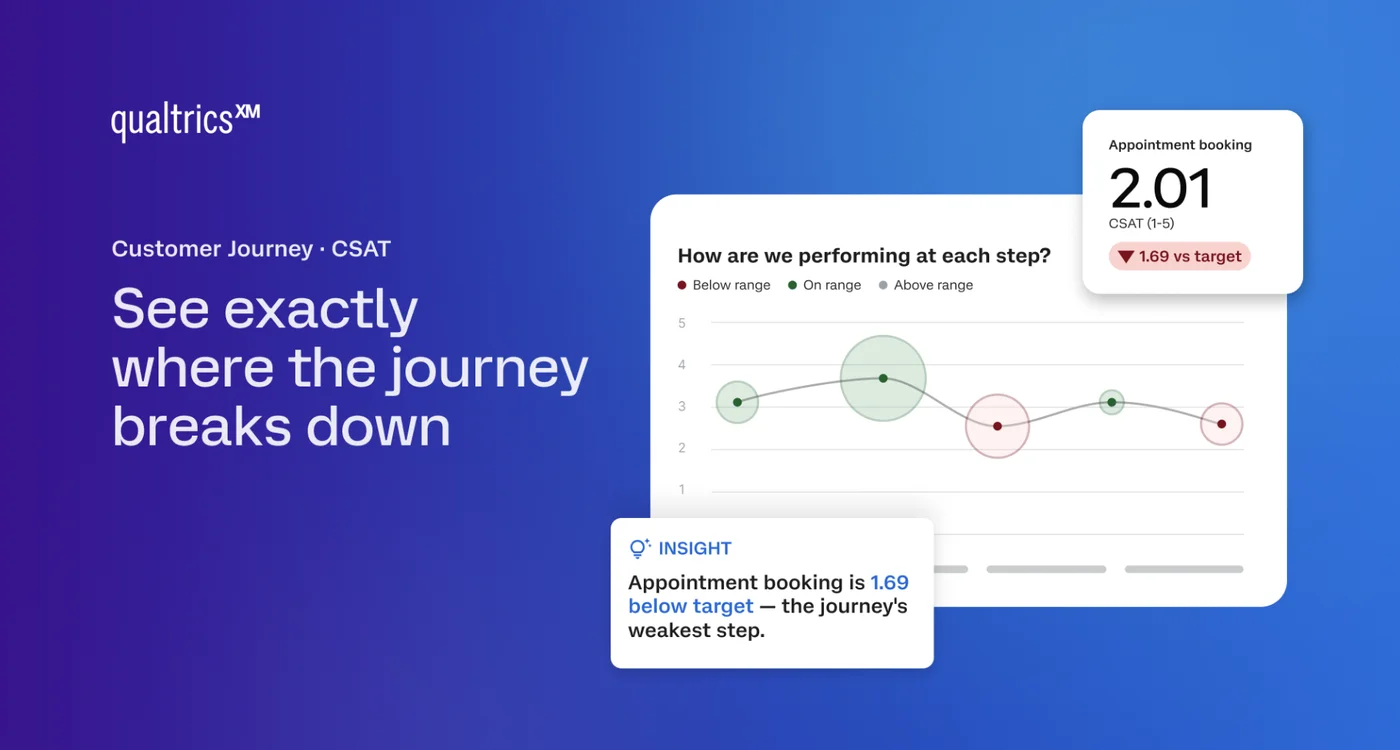
Qualtrics is built for organisations running 360 feedback across thousands of employees at once, not a single department.
Admins can automate nomination, evaluation, and reporting workflows, including round-robin nomination groups (up to 50 per project) that assign reviewers automatically instead of requiring HR to pair people manually.
Anonymity thresholds protect feedback confidentiality, and the Participant Portal lets employees manage their own nominations and self-evaluations, reducing how much falls back on HR to administer.
Key Features
- Participant portal: Gives employees one place to manage feedback requests, evaluations, reports, and development plans
- Nomination workflows: Configure who can nominate feedback givers and whether manager approval is required
- Role-based competency templates: Start with frameworks designed for senior leaders, managers, and individual contributors
- Automated programme administration: Automate evaluation routing, reminders, nominations, and reporting across large participant groups
- Self-service feedback requests: Participants can request feedback themselves instead of relying on HR to manage every evaluator relationship
Value Props
- Reduces the admin burden of large 360 programmes
- Gives HR tighter control over nominations and report access
- Supports different feedback frameworks across employee levels
- Makes it easier to standardise 360 programmes across large organisations
Why We Picked This
Qualtrics earns its place for enterprise programme governance.
The platform gives HR much more control over who participates, how evaluators are nominated, when approvals happen, and how reports are released.
Pricing
Qualtrics uses custom enterprise pricing.
10. Teamflect
Best for: Automating 360 feedback inside Microsoft Teams
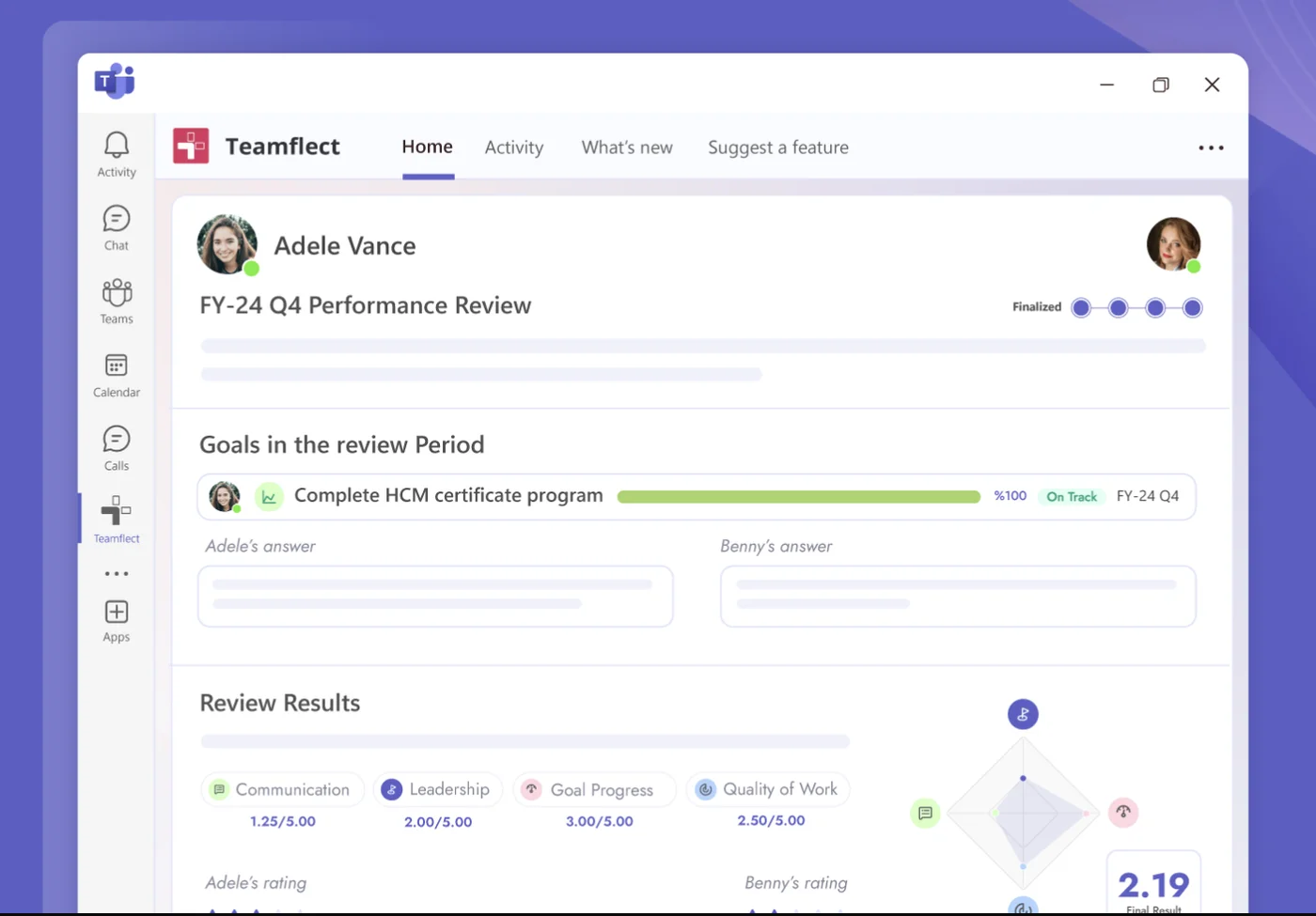
Teamflect is built directly into Microsoft Teams and Outlook, which makes it a natural option for organisations that already spend most of their working day inside Microsoft’s ecosystem.
Its 360 feedback cycles can collect input from managers, peers, direct reports, self-assessments, and even external stakeholders such as clients or partners.
Teamflect also gives HR more control over automation. Cycles can run on a schedule or around employee milestones, while AI-generated summaries condense large amounts of multi-rater feedback into key themes, strengths, and development areas.
Key Features
- Native Microsoft Teams workflows: Run 360 feedback without moving employees into a separate application.
- External feedback: Collect responses from clients, partners, or other people outside the organisation.
- Automated 360 cycles: Launch recurring feedback based on schedules or important employee dates.
- AI feedback summaries: Turn large sets of responses into concise themes and development insights.
- Custom templates: Build different 360 workflows around leadership, projects, skills, or other feedback needs.
Value Props
- Keeps feedback inside tools employees already use every day
- Reduces context switching during review cycles
- Makes recurring 360 processes easier to automate
- Uses AI to reduce the time spent reading and summarising responses
Why We Picked This
Most platforms on this list ask employees to log into a separate HR system to complete feedback. Teamflect brings the process into Teams and Outlook instead, which can make participation easier for organisations already deeply invested in Microsoft 365.
Pricing
Teamflect offers multiple plans, including a free option, with paid pricing depending on the feature set and number of users. Check Teamflect’s current pricing page for the latest rates.
How to Choose the Right 360 Feedback Software
The right platform depends less on who has the longest feature list and more on how you want 360 feedback to work inside your organisation.
A company running one leadership assessment each year needs something very different from a team collecting feedback continuously and using it in reviews, development plans, and succession decisions. Here are the areas worth checking before you shortlist a platform:
1. Decide whether you need continuous or structured 360 feedback
Start with how often feedback should happen.
Structured 360 feedback works around defined review cycles. HR launches the process, reviewers submit feedback, shares results, and closes the cycle.
Continuous 360 feedback lets employees and managers collect feedback throughout the year instead of waiting for a formal review.
Some organisations need one or the other, while others need both.
For example, you might want quarterly or annual 360 appraisals for formal performance discussions while still allowing employees to collect feedback after projects, milestones, or important pieces of work.
If that is your setup, check whether the platform genuinely supports both workflows rather than offering continuous feedback as a completely separate feature.
2. Check who can give feedback
360 feedback can mean very different things depending on the software. At minimum, check whether feedback can come from:
- Managers
- Peers
- Direct reports
- The employee themselves
- Cross-functional colleagues
- External clients or partners, if relevant
Also look at who controls reviewer selection.
Some platforms let employees nominate reviewers themselves. Others require manager or HR approval. More configurable tools let you combine both approaches. The right setup depends on how much control HR wants over the process.
3. Understand how anonymity works
Do not assume anonymous 360 feedback means the same thing across platforms. Ask specifically:
- Can peer feedback be anonymous?
- Are responses grouped together?
- Is there a minimum number of respondents before results appear?
- Can managers see who submitted comments?
- Can HR identify respondents even when employees cannot?
- Can anonymity rules differ by reviewer group?
This matters particularly for upward feedback. Employees may be less willing to give useful feedback about a manager if they think individual responses can be traced back to them.
4. Look beyond the questionnaire and check the final report
Most platforms can send a survey. The bigger difference is what you receive after everyone responds. Ask vendors to show you a real completed 360 report during the demo.
Useful reporting includes:
- Self-versus-others comparisons
- Results split by reviewer group
- Competency scores
- Strengths and development areas
- Written feedback
- Historical comparisons
- Team-level trends
- Development recommendations
A polished survey builder means very little if managers and employees struggle to understand the final output.
5. Check what happens after the feedback
This is one of the biggest differences between the tools on this list. A dedicated 360 platform generates a detailed assessment and development report. A wider performance management platform may let you carry those findings into:
- Development objectives
- Performance reviews
- One-to-ones
- Competency plans
- Learning paths
- Coaching
- Succession planning
Think about what you actually want employees to do differently once they receive the feedback. If the answer is unclear, even the best 360 report can sit unread until the next review cycle.
6. Test how much admin each cycle creates
The employee experience matters, but so does the HR workload behind it. Check how the platform handles:
- Reviewer nominations
- Reviewer approvals
- Invitations
- Deadlines
- Automatic reminders
- Incomplete responses
- Review reopening
- Sign-offs
- Report release
- Recurring cycles
For a 20-person leadership programme, some manual administration may be manageable. For hundreds or thousands of employees, small workflow gaps can quickly turn into hours of chasing reviewers and updating spreadsheets.
7. Decide whether you need a dedicated 360 tool or a wider performance platform
This should narrow the shortlist considerably.
A dedicated 360 feedback tool makes more sense when:
- You mainly need periodic 360 assessments
- Another system already manages performance
- L&D or external coaches own the process
- Detailed assessment reporting is the priority
A broader performance platform makes more sense when:
- Feedback needs to feed into performance reviews
- Employees collect feedback throughout the year
- You want goals, competencies, one-to-ones, and development in the same system
- HR wants one performance history for each employee
Neither approach is automatically better. The question is whether 360 feedback is a standalone programme in your organisation or part of a wider performance process.
8. Compare pricing models before you choose
360 feedback software may charge per employee, per recipient, per assessment, per module, or through a custom annual contract.
The best pricing model depends on how widely you plan to use it. Per-recipient pricing can work for a small leadership group but gets expensive if you use 360 feedback across the workforce.
Compare total pricing based on participant numbers, review frequency, and required modules, not the advertised starting price.
9. Run a real pilot before committing
A product demo rarely exposes the frustrating parts of a 360 process. Before rolling the platform out organisation-wide, run one genuine review cycle with a small group. Test:
- How easy it is to nominate reviewers
- How long feedback takes to complete
- Whether reminders work properly
- How anonymity appears in practice
- Whether managers understand the report
- How easily employees can turn feedback into next steps
- How much work HR has to do behind the scenes
A short pilot will usually tell you more than another hour of vendor slides.
Standalone 360 Feedback Tool vs Performance Management Platform
The next decision is whether you need a dedicated 360 tool or a broader performance management platform.
A standalone 360 feedback tool works better when the assessment itself is the priority. These platforms tend to go deeper on questionnaires, rater groups, reports, and development outputs without adding wider HR features.
A performance management platform makes more sense when 360 feedback needs to connect with reviews, goals, one-to-ones, competencies, or development plans.
| Choose a standalone 360 tool if | Choose a performance management platform if |
|---|---|
| You mainly run periodic 360 assessments | Feedback is part of ongoing performance management |
| Another system already handles reviews and goals | You want reviews, goals, feedback, and development in one place |
| Detailed assessment reporting is the priority | Managers need wider performance context around the feedback |
| L&D or external coaches manage the programme | HR and managers run the process internally |
| Only selected leaders or employees need 360s | You want 360 feedback available across more of the workforce |
StaffCircle: The Best 360 Feedback Software for Continuous Performance Management
One of the biggest problems with 360 feedback is that people spend time giving thoughtful input, then rarely see what happens with it.
When feedback sits in a static report, it becomes a once-a-year exercise. StaffCircle keeps it connected to objectives, one-to-ones, competencies, development plans, and formal appraisals in the same employee record.
It also supports both structured 360 appraisals and continuous feedback throughout the year, so managers have more context at review time and employees have clearer next steps afterward.
Book a call with us to see how StaffCircle can make 360 feedback part of your ongoing performance and development process.
See StaffCircle in action
Book a personalised demo and see how StaffCircle drives performance, engagement and development.